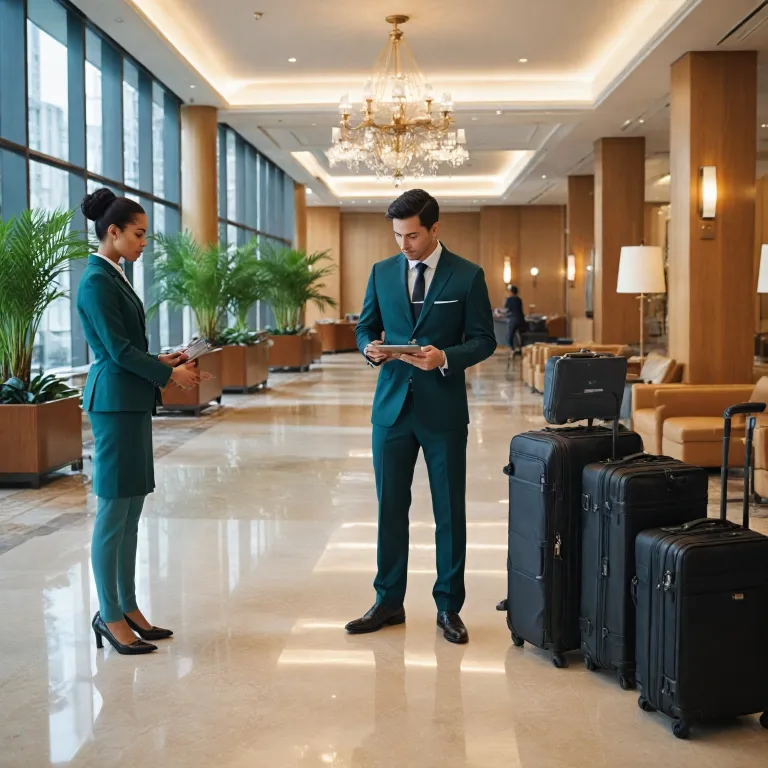
Porter service meaning for HR leaders and hospitality educators
Understanding porter service meaning is essential for any HR manager shaping front of house teams. In hotels, airports, railway stations, and hospitals, a porter is the carrier who ensures luggage, equipment, and people move smoothly through complex facilities. For DRH and responsables recrutement, this apparently simple job hides sophisticated customer service expectations and operational duties.
Porter services today extend far beyond carrying bags during the day or night. Porters support the entire facility by handling cleaning, light maintenance, and guest facing tasks that influence brand perception at every step. When HR leaders define the porter job, they must integrate both physical duties and emotional intelligence, because this role often becomes the first and last human contact in the guest journey.
In many service environments, the porter service is also a training ground for future supervisors. A well structured job description can turn an entry level position into a pipeline for high touch guest relations, facility services coordination, and even marketing support. This is why groups hôteliers and cabinets RH spécialisés increasingly treat porter experience as a strategic asset rather than a purely operational cost.
For écoles hôtelières and organismes de formation, clarifying porter service meaning helps design curricula that blend technical skills with soft skills. Students must understand that a porter day is not only about physical effort but also about reading guest expectations and coordinating with other employees. When training programs reflect the real scope of porter services, graduates arrive on site ready to contribute from the first day.
From luggage carrier to experience curator : redefining porter roles
Historically, a porter was simply called to carry luggage manually, sometimes using trolleys or carts. In contemporary hospitality, the same job now includes guiding guests through common areas, explaining services, and supporting cleaning maintenance standards. This evolution changes how HR departments write the porter job description and how they evaluate performance.
In a service hotel, day porters often coordinate with housekeeping and janitorial services to keep lobbies, corridors, and meeting spaces impeccable during business hours. Their duties day may include quick cleaning tasks, reporting maintenance issues, and supporting deep cleaning teams by preparing areas and equipment. These maintenance tasks are not heavy technical interventions but they are crucial for safety, aesthetics, and guest comfort.
Porter services also intersect with marketing and customer service strategies. A well trained porter can upsell services, answer questions usually handled by a travel agent, and reinforce the brand promise through attentive gestures. For HR leaders, this means that porter service meaning must be reframed as part of the overall guest experience architecture, not as a marginal operational function.
Railway porter and hospital porter roles illustrate how broad the spectrum of porter services has become. In hospitals, porters move patients and equipment, while in railway stations they manage luggage flows and guide passengers through crowded areas. For hospitality recruiters, these adjacent profiles represent valuable talent pools, because their experience with high touch interactions and complex facilities transfers well to hotel environments.
Designing porter job descriptions that align with facility services
To support effective recruitment, DRH must translate porter service meaning into precise, realistic job descriptions. A robust porter job description should detail cleaning services expectations, maintenance tasks boundaries, and the level of customer service required in each facility. It should also clarify reporting lines, for example whether the porter reports to a front office manager, a facility manager, or a housekeeping supervisor.
In office buildings, day porters often operate under integrated facility services contracts that combine cleaning, janitorial services, and light maintenance. Their duties day typically include monitoring common areas, coordinating with cleaning teams, and ensuring that business hours operations remain undisturbed. When HR teams recruit for these roles, they must highlight the need for autonomy, situational awareness, and clear communication.
Within a service hotel, porter services may be shared between bell staff and lobby attendants, especially during peak day periods. The porter day then involves luggage handling, guest escort, quick cleaning maintenance interventions, and support for events or groups. A detailed job description helps employees understand which tasks are core duties and which are occasional support activities, reducing role confusion and turnover.
For groupes hôteliers, harmonizing porter job descriptions across properties supports consistent training and mobility. Employees can move between facilities, cities, or brands while maintaining a coherent set of skills and expectations. This standardization also facilitates collaboration with cabinets RH spécialisés, which can source candidates whose experience matches the defined scope of porter services and facility services.
Training porter employees for high touch customer service excellence
Once porter roles are clearly defined, organismes de formation and écoles hôtelières can build targeted training pathways. Effective programs combine physical handling techniques, safety, and ergonomics with communication skills, cultural awareness, and conflict resolution. In this context, porter service meaning becomes a framework for teaching how operational tasks and emotional intelligence intersect in real time.
Training modules should simulate a full porter day across different facility types, from service hotel lobbies to office buildings and transport hubs. Learners practice cleaning services coordination, basic maintenance tasks reporting, and guest escort through busy common areas. By rotating scenarios between business hours operations and early or late shifts, trainers expose future porters to the full rhythm of the job.
Customer service content must be as rigorous as technical content. Porters learn how to handle requests that might otherwise go to a travel agent, how to manage complaints, and how to escalate issues to the manager on duty. They also practice high touch gestures, such as anticipating needs, remembering preferences, and adapting communication styles to different cultures and languages.
Digital tools now support porter services through task management apps and real time messaging. Training therefore includes using mobile devices to receive cleaning maintenance requests, log duties day, and coordinate with facility services teams. When employees master both human interaction and digital workflows, porter services become a powerful lever for operational efficiency and guest satisfaction.
Recruitment strategies for porter and day porter talent pipelines
For DRH and responsables recrutement, building a sustainable pipeline of porter and day porter talent requires a shift in positioning. Instead of presenting the job as purely physical, recruitment campaigns should emphasize career paths toward supervisor, facility manager, or guest relations roles. This reframing aligns porter service meaning with long term employability and internal mobility.
Job ads must clearly state the range of tasks, from luggage handling and cleaning services coordination to basic maintenance tasks and customer service. Candidates with experience in janitorial services, office buildings, hospitals, or railway stations often bring valuable skills in managing complex facilities. By recognizing these backgrounds explicitly, HR teams widen the talent pool and reduce time to hire.
Assessment methods should reflect the multidimensional nature of porter services. Structured interviews, role plays in common areas, and situational judgment tests help evaluate both physical readiness and high touch interaction capabilities. Some groupes hôteliers also integrate short practical trials during business hours, allowing managers to observe how candidates handle real guests and real facility constraints.
Partnerships with écoles hôtelières and organismes de formation are essential to professionalize the porter job. Co designed curricula, apprenticeships, and alternance contracts create a steady flow of trained day porters who understand cleaning maintenance standards, safety rules, and brand values. For strategic guidance on aligning hospitality and customer service competencies, HR leaders can consult resources such as this analysis of hospitality and customer service for talent training and recruitment strategies.
Performance management, career paths, and cross sector mobility
To retain porter employees, HR leaders must align performance management with the real scope of porter services. Key indicators should cover punctuality, task completion, guest feedback, and collaboration with cleaning services and facility services teams. When managers recognize both visible duties day and backstage maintenance tasks, porters feel their contribution is valued.
Career paths can move horizontally across facilities or vertically toward supervisory roles. A porter in a service hotel may progress to day porter supervisor, then to assistant facility manager, and eventually to operations manager. Similarly, experience in office buildings or hospitals can lead to specialized roles in logistics, safety, or high touch guest relations, especially in large groupes hôteliers.
Cross sector mobility is particularly relevant where porter service meaning overlaps between industries. A hospital porter accustomed to moving patients and equipment can adapt quickly to hotel environments that require careful handling of luggage and mobility devices. A railway porter used to crowded platforms and tight business hours schedules brings strong crowd management and communication skills.
Structured development plans should include training refreshers on cleaning maintenance, deep cleaning coordination, and customer service excellence. Mentoring programs pair experienced day porters with new employees to transmit tacit knowledge about common areas, guest flows, and facility specific rituals. "Hotel porters assist guests with their luggage, provide information about hotel facilities, and may perform minor maintenance tasks." This quote encapsulates the hybrid nature of the role and can serve as a reference point for performance standards.
Integrating porter services into holistic hospitality experience design
For groups hôteliers and cabinets RH spécialisés, the final step is to integrate porter services into overall experience design. Porter service meaning must be aligned with brand positioning, architectural choices, and service hotel concepts. In luxury environments, high touch interactions dominate, while in business hotels efficiency and speed during business hours become critical.
Facility layout strongly influences porter day workflows. Wide corridors, strategically placed storage rooms, and clear signage reduce unnecessary walking and support efficient cleaning maintenance and maintenance tasks. HR and facility managers should collaborate during design or renovation projects to ensure that porter services can operate smoothly in all common areas.
Marketing teams also benefit from understanding porter roles. Porters often hear unfiltered guest feedback about services, room conditions, and local recommendations usually provided by a travel agent. By channeling this information to marketing and operations, employees contribute to continuous improvement and more accurate positioning of facility services and customer service promises.
Finally, technology can elevate porter services without dehumanizing them. Task management systems coordinate cleaning services, janitorial services, and deep cleaning schedules, while allowing porters to focus on guest facing duties day. When HR leaders, managers, and training partners treat porter employees as central actors in the hospitality ecosystem, porter services become a strategic differentiator rather than a background function.
Key statistics on porter roles and services
- Average salary of a hotel porter in the U.S. : 25 000 USD per year.
- Number of porters employed in U.S. hospitals : 50 000 individuals.
Frequently asked questions about porter service meaning
What are the typical duties of a hotel porter?
Typical duties include carrying luggage, escorting guests to rooms, explaining hotel facilities, and performing minor maintenance tasks such as reporting faults or assisting with simple adjustments. In many properties, porters also support cleaning services in common areas and coordinate with reception during peak arrivals and departures. Their role combines physical handling, guest orientation, and basic facility support.
How much should I tip a porter?
Tipping practices vary by country and property segment. In the U.S., it is customary to tip 1 to 2 dollars per bag, with higher amounts in luxury hotels or for complex assistance. HR and training teams should brief porters on local norms so they can manage guest expectations with tact.
Are porter services available at all train stations?
Porter services are generally available at major train stations with high passenger volumes. Smaller or regional stations may not offer dedicated porters, relying instead on self service trolleys or limited staff support. When recruiting from railway backgrounds, HR teams should verify the candidate’s actual exposure to luggage handling and customer service.
What are the typical duties of a hospital porter?
Hospital porters move patients between departments, transport medical equipment, and deliver supplies across the facility. They must follow strict hygiene, safety, and confidentiality protocols while maintaining reassuring communication with patients and families. This combination of logistics and empathy makes hospital porters attractive candidates for high touch hospitality roles.
How is technology changing porter services?
Technology supports porter services through digital task assignment, real time communication, and tracking of cleaning maintenance and maintenance tasks. Mobile apps allow managers to prioritize duties day, monitor response times, and coordinate with facility services and janitorial services. These tools enhance efficiency while freeing porters to focus on direct guest interaction.
