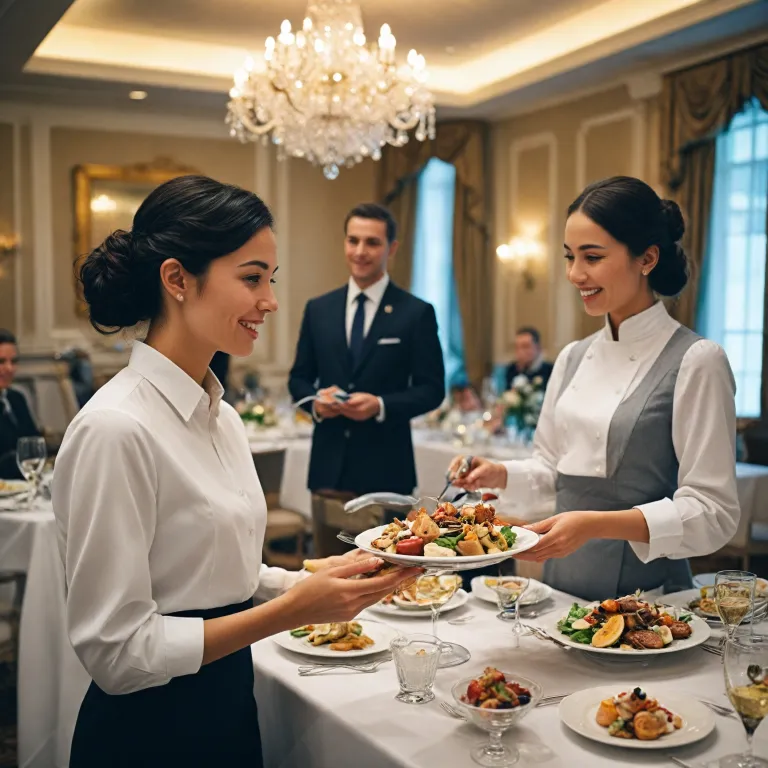
Understanding what a banquet server is in modern hospitality
For HR leaders in hospitality, clarifying what a banquet server is means clarifying a strategic role, not a casual side job. A banquet server operates at the crossroads of banquet service, event operations, and elevated customer service, translating a hotel’s brand promise into tangible guest experiences. When DRH and responsables recrutement define the server banquet position precisely, they can align recruitment, formation, and performance management with measurable hospitality standards.
In operational terms, a banquet server is responsible for serving food and beverages during structured events such as weddings, conferences, and corporate banquets. These banquet servers set tables, serve food beverages, manage beverages guests flows, and maintain positive interactions while coordinating with kitchen staff and the wider service team. Their essential functions include preparing the banquet event space, executing food service and beverage service to a high level, and closing the room while protecting the business reputation of the hotel or venue.
From a talent perspective, the banquet server job requires more than the ability to carry trays and serve food. HR managers must evaluate the ability to maintain proper hospitality standards under pressure, handle guest requests with tact, and work within a diverse team in a demanding work environment. Many candidates arrive with a high school education and limited experience, so structured formation on food beverages handling, hygiene, and service standards becomes critical to maintain consistent quality.
Banquet service also demands strong coordination with event planners, catering managers, and venue management to align service timing with program flows. When HR and training partners frame what banquet operations entail in competency terms, they can better define career paths from banquet servers to supervisor or manager roles. This clarity supports retention, strengthens the employer brand, and anchors the role of banquet server within long term hospitality careers.
Core functions, skills, and standards of the banquet server role
For écoles hôtelières and organismes de formation, teaching what a banquet server is starts with the essential functions of the role. Banquet servers are responsible for setting up tables, serving food and beverages, and ensuring guest satisfaction during events. Banquet servers are responsible for setting up tables, serving food and beverages, and ensuring guest satisfaction during events.
These essential functions translate into concrete operational tasks that must meet strict hospitality standards. A server banquet must set tables according to the event brief, align tableware and glassware with proper food beverage sequencing, and maintain a clean, safe work environment throughout the banquet event. During service, they serve food and beverages guests in coordinated waves, respond to guest requests quickly, and maintain positive communication with kitchen staff to protect timing and food service quality.
From a competency framework perspective, the job requires a blend of technical and behavioral skills. Key skills include excellent customer service, time management, attention to detail, and the ability to lift and carry heavy items. Training programs should therefore integrate modules on ergonomics, tray handling, food beverages safety, and communication techniques for handling demanding guests while preserving a high level of professionalism.
For HR departments in large hotel groups, defining what banquet excellence looks like allows them to standardize recruitment and evaluation. They can assess candidates on their ability to maintain proper standards under pressure, work within a team, and understand the business impact of consistent banquet service. To deepen this approach, many groups now integrate strategies for recruitment, formation and retention specifically tailored to event and banquet functions, as outlined in resources on strengthening the hospitality industry talent pool.
Designing recruitment strategies around the banquet server profile
For DRH and cabinets RH spécialisés, the question “what is a banquet server” quickly becomes “how do we recruit the right banquet servers at scale”. The banquet server job is often seasonal, part time, and event driven, which can lead to high turnover and inconsistent hospitality standards if recruitment is not structured. To address this, HR leaders must define a clear competency based profile that links the ability to serve food, manage guest requests, and maintain positive interactions with the strategic goals of the hotel business.
Effective recruitment starts with a precise description of the work environment and service expectations. Candidates should understand that banquet service involves long periods standing, carrying heavy trays, and serving food beverages guests in a fast paced context while preserving a high level of customer service. Job descriptions must highlight the need to coordinate with kitchen staff, follow proper food service and beverage protocols, and respect hygiene and safety standards in all banquet functions.
Because many banquet servers enter the industry with only a high school background, HR teams should emphasize attitude, learning ability, and team fit over prior experience. Structured interviews and practical tests can evaluate how candidates set tables, interact with simulated guests, and handle basic food beverages scenarios. For hotel groups, partnering with specialized agencies that understand what banquet operations require can significantly improve talent pipelines, as detailed in guidance on mastering the art of recruiting hotel staff.
Recruitment strategies should also position the banquet server role as an entry point into broader hospitality careers. By mapping pathways from server banquet positions to supervisor, event coordinator, or manager roles, HR can present the job as meaningful work rather than temporary labour. This approach aligns with the growing emphasis on customer service skills and adaptability in banquet service and supports long term retention in the hospitality industry.
Building training pathways for banquet servers and future leaders
Once HR teams understand what a banquet server is, the next challenge is designing formation that transforms recruits into reliable banquet servers. Training should cover the full banquet event cycle, from room setup and table set standards to serving food and beverages guests and managing event breakdown. For écoles hôtelières, integrating these modules into curricula helps students experience real banquet service conditions before entering a hotel or event business.
Operationally, formation must address both technical and relational aspects of the job. On the technical side, trainees learn how to set tables according to different banquet functions, follow proper food beverage sequences, and coordinate with kitchen staff to ensure synchronized food service. On the relational side, they practice handling guest requests, maintaining positive communication within the team, and delivering a consistently high level of customer service even in a stressful work environment.
Organismes de formation can also incorporate technology into their programs, reflecting innovation trends in banquet service. Simulations using digital order systems, service tracking tools, and communication apps help future banquet servers understand how modern hotels maintain standards and monitor essential functions in real time. This prepares them to work in venues where technology supports the manager and the wider service team in orchestrating complex events.
For DRH and groupes hôteliers, structured on the job training and mentoring are crucial to maintain performance and reduce turnover. Pairing new banquet servers with experienced server banquet mentors accelerates learning and embeds hospitality standards into daily work. To further professionalize this pathway, many organizations collaborate with specialized partners who elevate talent acquisition and development, as discussed in resources on how hospitality recruitment agencies elevate talent acquisition.
Managing performance, well being, and retention in banquet teams
Understanding what a banquet server is also means recognizing the physical and emotional demands of the role. Banquet service often involves irregular hours, late finishes, and intense peaks of activity, which can affect well being and retention if not managed carefully. For HR managers and hotel leadership, creating a supportive work environment is therefore essential to maintain positive morale and consistent hospitality standards.
Performance management for banquet servers should combine quantitative and qualitative indicators. Quantitative metrics might include service timing, error rates in food beverages orders, and adherence to setup standards for tables and banquet event spaces. Qualitative feedback from guests, event planners, and kitchen staff can highlight how effectively a server banquet handles guest requests, collaborates with the team, and upholds a high level of customer service during demanding functions.
Well being initiatives must address the physical nature of serving food and beverages guests. Training on safe lifting, ergonomic tray handling, and pacing during long services helps protect health and maintain performance over time. Managers should also structure shifts to balance peak banquet functions with recovery periods, ensuring that banquet servers can maintain proper focus and energy across multiple events.
Retention strategies should position the banquet server job as a stepping stone within the hotel business rather than a dead end role. Clear communication about career paths, access to additional formation, and opportunities to move into supervisory or manager positions all contribute to stronger engagement. When DRH, responsables recrutement, and cabinets RH spécialisés treat banquet service as a core hospitality function, they reinforce the status of banquet servers and support a more stable, skilled workforce.
Aligning banquet server roles with long term hospitality talent strategies
For strategic HR leaders, the question “what is a banquet server” ultimately connects to broader talent architecture in hospitality. Banquet service sits at the intersection of events, food service, and brand experience, making banquet servers key ambassadors for the hotel or venue. Their ability to maintain proper standards while serving food beverages guests directly influences guest satisfaction scores, repeat business, and the overall reputation of the hospitality brand.
Integrating the banquet server role into long term workforce planning requires collaboration between DRH, écoles hôtelières, organismes de formation, and groupes hôteliers. Together, they can define competency frameworks that describe essential functions, from setting tables and coordinating with kitchen staff to managing guest requests and supporting the manager during complex banquet functions. These frameworks help align recruitment, formation, and evaluation across properties and regions, creating a more coherent talent pipeline.
For cabinets RH spécialisés, positioning the banquet server job within structured career paths enhances the attractiveness of hospitality careers. Candidates with only a high school background can see how starting as banquet servers may lead to roles in event coordination, F&B management, or broader hospitality management. This narrative supports diversity, inclusion, and social mobility while addressing the increased demand for banquet servers in the hospitality industry.
Finally, aligning banquet service roles with digital transformation initiatives strengthens both efficiency and employee experience. Technology that supports food service tracking, communication between service and kitchen staff, and real time feedback on hospitality standards can make the work environment more manageable and transparent. By treating the banquet server as a strategic role within the hospitality ecosystem, HR leaders ensure that banquet events consistently deliver a high level of service and contribute to sustainable business performance.
Key quantitative insights on banquet server roles
- The average hourly wage for a banquet server in the United States is approximately 16.5 USD.
- This corresponds to an average annual salary of around 27,556 USD for full time equivalent roles.
- In the highest paying state, average annual compensation for banquet servers reaches about 37,708 USD.
- Market data indicates increased demand for banquet servers across the hospitality industry, particularly in event driven venues.
- Employers increasingly emphasize customer service skills and adaptability as core hiring criteria for banquet service positions.
Frequently asked questions about what a banquet server is
What are the primary responsibilities of a banquet server?
The primary responsibilities of a banquet server include setting up tables according to event specifications, serving food and beverages during the banquet event, and ensuring that guests receive attentive customer service throughout. Banquet servers also coordinate with kitchen staff to maintain proper timing between courses and respond promptly to guest requests. After the event, they help break down the room, maintain cleanliness, and reset the work environment for the next function.
What skills are essential for a banquet server?
Essential skills for a banquet server combine technical service abilities with strong interpersonal competencies. Key skills include excellent customer service, time management, attention to detail, and the ability to lift and carry heavy items safely during service. Banquet servers also need the ability to maintain positive communication within the team, adapt quickly to changes in event flow, and uphold hospitality standards even under pressure.
What is the average salary of a banquet server in the United States?
In the United States, the average hourly wage for a banquet server is around 16.5 USD, which translates into an approximate annual salary of 27,556 USD for full time equivalent work. Compensation can vary significantly depending on region, type of hotel or venue, and the complexity of banquet functions handled. Some states and high end properties offer higher pay levels, with the highest paying state reaching average annual earnings close to 37,708 USD for experienced banquet servers.
How does a banquet server differ from a restaurant server?
A banquet server typically works in structured events such as weddings, conferences, and corporate functions, where menus and service flows are pre planned. In contrast, a restaurant server usually handles individual tables with à la carte ordering and more variable pacing. Banquet service emphasizes synchronized serving food to large groups, coordination with event planners, and strict timing, while restaurant service focuses more on personalized, table by table interactions.
What career paths can start from a banquet server position?
A banquet server position often serves as an entry point into broader hospitality and events careers. With experience and additional formation, banquet servers can progress to roles such as banquet captain, event supervisor, F&B manager, or event sales coordinator. For candidates with a high school background, this pathway offers a structured route to higher responsibility positions within hotel and event business structures.