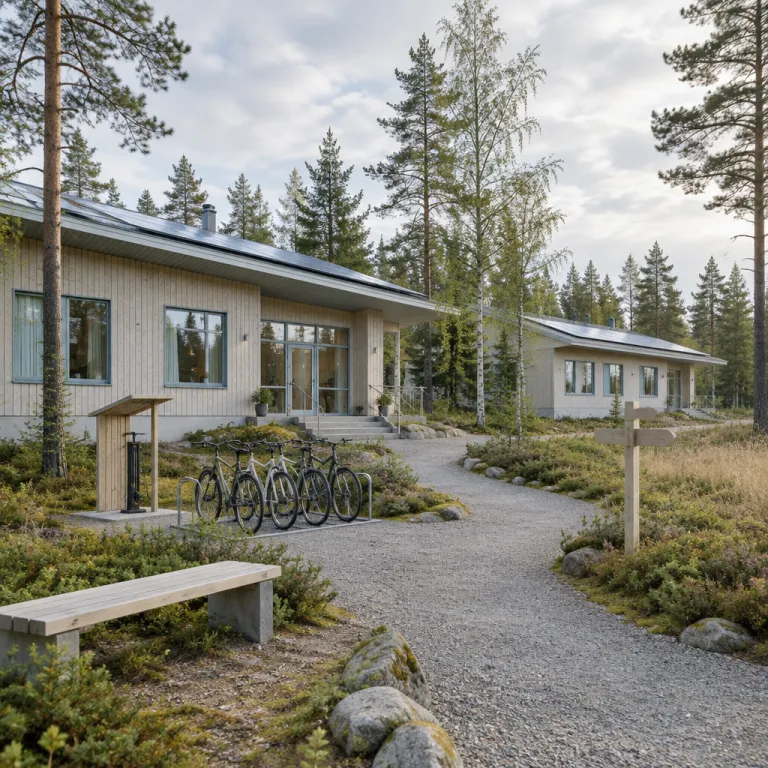
Turning a nature based venue at Sormarka into an employer brand asset
When the general manager of a forest-side conference lodge near Sormarka asked why applications from experienced event professionals were slowing, the answer was not pricing or distribution. Hotel chain affiliation for a venue at Sormarka is no longer only a commercial decision; it has become a decisive lever for talent attraction. When a nature based venue like Sormarka positions itself between an independent identity and the visibility of a hotel chain, the employer brand can either flourish or fade depending on how clearly the narrative is built. Human resources leaders who manage a conference hotel in such a setting must translate every aspect of the property into a compelling story for candidates.
The unique location of a venue at Sormarka, surrounded by nature yet serving demanding corporate meetings and events, allows HR directors to articulate a differentiated promise about quality of life at work. Meeting rooms that open onto forests, flexible rooms for hybrid meetings, and facilities at Sormarka designed for both leisure and business travel can be framed as daily working tools for the team rather than only guest amenities. This shift from product centric to people centric storytelling is what separates a generic hotel from a magnetic employer brand, especially when candidates compare several conference properties within the same hotel group or hotel collection.
For an independent property considering chain affiliation, the key question is how the hotel group’s positioning will reinforce or dilute this nature based advantage. A global hotel brand or soft brand collection can bring international training standards, structured career paths, and access to other hotels and resorts in North America or the United States, which strongly appeals to ambitious talents. Yet the Sormarka sense of place must remain visible in every HR message, so that candidates understand they are joining a specific venue and not just another anonymous hotel chain, and can picture their daily work in a concrete environment.
Designing employer branding around chain affiliation choices
When a company evaluates hotel chain affiliation for a venue at Sormarka, HR leaders should be at the table from the first negotiation. Chain affiliation is not only about distribution, loyalty programmes, and corporate travel contracts; it reshapes how the employer value proposition is perceived by candidates, hospitality schools, and training organisations. A clear HR voice helps align the affiliation strategy with long term talent needs rather than only short term revenue targets, and prevents a purely commercial deal from undermining the property’s appeal as a workplace.
For example, joining a hotel group such as Choice Hotels or another global hotel brand can instantly signal stability, structured learning, and mobility across multiple hotels and hotel brands. This can be positioned in employer branding campaigns as access to a wider hotel collection, including hotels and resorts in different regions and even in North America, while still emphasising the daily reality of working at a nature based conference hotel near Sormarka. HR directors can then build partnerships with hotel management schools that highlight both the international exposure and the intimate scale of the Sormarka conference venue, using concrete internship stories and alumni testimonials.
Employer branding content should explain concretely how chain affiliation benefits the team, not only the guests. Articles on canopy style careers thinking in hospitality, such as those about elevating employer branding through canopy careers thinking, show how layered career paths can be communicated in a simple way. HR leaders at a venue in Sormarka can adapt this approach by mapping roles from entry level rooms division to conference and events management, then linking each step to training modules provided by the hotel chain or by independent training providers, and by showcasing one or two real internal promotions each year.
Balancing independent spirit and global hotel group standards in talent strategy
Many HR directors fear that hotel chain affiliation for a venue at Sormarka will erase the independent culture that makes their team unique. In reality, the most effective employer brands present chain affiliation and independent spirit as complementary strengths rather than opposites. The Sormarka environment, with its nature based activities and human scale meetings, can coexist with the rigorous standards of an international hotel group when HR messaging is carefully curated and supported by examples from daily operations.
One practical approach is to frame the property as an independently minded conference hotel within a larger hotel collection, where local leaders have real autonomy over meetings and events design and community partnerships. Content about how a community anchored hotel brand can redefine employer branding in hospitality, such as the perspective shared in this analysis of community centred hotel branding, offers a useful reference. HR teams at a venue in Sormarka can highlight similar initiatives, for example local sourcing for food and beverage or collaborations with outdoor activity providers, as proof that the company values local identity and does not simply copy paste a global template.
At the same time, candidates must clearly understand the advantages of being part of a hotel chain, from structured training to mobility across hotels and resorts in the United States or other international markets. Positioning the property as a gateway to global hotel careers, while emphasising that the first stay in the company happens at a nature based venue in Sormarka, creates a powerful narrative. This dual promise appeals both to young graduates from hotel schools seeking international exposure and to experienced managers who value the intimacy of a smaller property, and it can be reinforced through internal ambassadors who share their own mobility stories.
From facilities to talent magnet : reframing Sormarka conference assets in HR messaging
Many conference hotel leaders still describe their employer brand using the same vocabulary they use for sales brochures, focusing on rooms, meeting rooms, and technical facilities at Sormarka. For talent attraction, these elements must be reframed as tools that enable meaningful work, learning, and collaboration for the team. Hotel chain affiliation for a venue at Sormarka offers an opportunity to rewrite this narrative with the support of professional HR and marketing resources from the hotel group, and to align it with the wider positioning of the meetings and events portfolio.
Instead of simply listing the number of rooms or the size of the conference centre, HR content can explain how the Sormarka venue layout allows teams to orchestrate complex meetings and events smoothly. A property that hosts international corporate conferences, hybrid meetings, and nature based incentive programmes becomes a living training ground for future leaders in events and operations. This perspective turns the Sormarka conference infrastructure into a differentiating argument for candidates who want to build expertise in meetings and events management, and who are comparing several potential employers in the same destination.
To reinforce this positioning, HR leaders can integrate operational KPIs into employer branding, such as payroll per occupied room benchmarks explained in analyses like how payroll per occupied room is reshaping hotel staffing models. Showing how the company uses such data to optimise staffing and protect work life balance sends a strong signal of professionalism. Candidates then perceive the hotel as a place where meetings, events, and conference operations are managed with both financial rigour and respect for the team’s well being, rather than as a venue that relies only on intuition or last minute scheduling.
Aligning international mobility, hotel brands, and local training ecosystems
For a hotel chain affiliation for a venue at Sormarka to strengthen employer branding, international mobility must be structured and credible. Promising vague opportunities to move to hotels and resorts in North America or the United States without clear pathways quickly damages trust. HR directors should instead design transparent mobility programmes that link the Sormarka property with specific hotels in the hotel group’s network, including other conference hotel or resort destinations, and communicate these routes clearly during recruitment.
These programmes work best when integrated with local training ecosystems, such as hotel schools and training organisations that already collaborate with the Sormarka venue. Joint curricula can combine nature based guest experience design, conference and events management, and global hotel service standards, creating a distinctive skills portfolio. Students and young professionals then see the property as a launchpad where they can master both local authenticity and international best practices in hotel brand management, and can progress from internships to supervisory roles in a structured way.
Partnerships with corporate travel buyers and international companies that regularly use the meeting rooms and events spaces can also feed into talent development. For example, co created workshops on sustainable business travel, inclusive meetings, or hybrid conference design can be hosted at the property, turning clients into learning partners. This approach reinforces the perception that the company is not only a hotel but a professional campus where careers in meetings, events, and corporate hospitality are actively nurtured, and where the Sormarka setting becomes part of a broader learning ecosystem.
Measuring employer branding ROI for a chain affiliated Sormarka venue
Once a hotel chain affiliation for a venue at Sormarka is in place, HR leaders need robust KPIs to track its impact on talent attraction and retention. Traditional metrics such as time to hire or turnover by department remain essential, but they should be complemented by indicators specific to a conference hotel and nature based venue. For example, tracking applications from candidates with meetings and events experience or from graduates of targeted hotel schools can show whether the employer brand resonates with priority segments and with the audiences that value the Sormarka environment.
Qualitative data are equally important, especially for an independently minded property operating within a hotel group or hotel collection. Candidate feedback on the recruitment journey, perceptions of the Sormarka conference environment, and expectations regarding international mobility across hotels and resorts in the chain affiliation should be collected systematically. These insights help refine messaging about the Sormarka venue, the company culture, and the balance between local autonomy and global hotel standards, and they provide early warning signs when promises and reality start to diverge.
A concrete illustration comes from Scandic Hotels, which reported lower turnover and higher engagement after aligning employer branding with nature based locations and clear development paths at selected Nordic conference properties. In its 2019 annual report, Scandic highlighted initiatives such as the “Scandic Way of Service” training framework and local outdoor activity partnerships at properties like Scandic Holmenkollen Park in Oslo, which contributed to improved employee Net Promoter Scores and reduced staff churn in meetings focused units. When HR leaders link similar employer branding performance to business outcomes such as guest satisfaction in meetings and conference segments, upsell rates for business travel, and feedback from corporate clients using the meeting rooms, they can demonstrate impact. As a strong employer brand attracts qualified talents who excel in orchestrating complex events, the property’s reputation as a conference hotel strengthens, which in turn reinforces the attractiveness of the Sormarka venue for both guests and future employees.
Key figures shaping employer branding in chain affiliated conference hotels
- According to the World Travel & Tourism Council “Travel & Tourism Economic Impact 2019” report, travel and tourism supported more than 330 million jobs worldwide before the pandemic, underlining the scale of the talent pool that hotel chains and independent hotels compete for in meetings and events segments.
- Data from the Global Business Travel Association “BTI Outlook 2019” indicate that global business travel spending exceeded 1,000 billion USD before the crisis, with a significant share linked to meetings, conferences, and corporate events hosted in conference hotel properties.
- Research by Deloitte in its 2019 “Global Human Capital Trends” report has shown that companies with strong employer brands can reduce cost per hire by up to 50 percent, a critical factor for hotel group operators managing multiple hotels, resorts, and conference venues.
- Studies from Cornell’s School of Hotel Administration, including research published in the Cornell Hospitality Quarterly in 2018, highlight that employee engagement scores in hotels correlate strongly with guest satisfaction, especially in high touch areas such as meetings, events, and conference services.
- Surveys by the Hospitality Financial and Technology Professionals association show a growing adoption of payroll per occupied room as a staffing KPI, which directly influences how HR leaders plan teams for meeting rooms and events operations and how they communicate workload expectations to candidates.
FAQ : employer branding and hotel chain affiliation at nature based conference venues
How does hotel chain affiliation influence talent attraction for a Sormarka venue ?
Chain affiliation gives a Sormarka property access to recognised hotel brands, structured training, and international mobility, which are highly valued by candidates. At the same time, the Sormarka venue can emphasise its nature based environment and human scale culture to stand out from urban hotels. The combination of global hotel standards and local authenticity usually creates a stronger employer value proposition than either element alone, especially when illustrated with real career stories.
Can an independent conference hotel keep its identity after joining a hotel group ?
Yes, provided that the affiliation agreement clearly protects local decision making on culture, community partnerships, and guest experience design. Many hotel collection models are built precisely to preserve independent character while offering chain affiliation benefits such as distribution, loyalty, and training. HR leaders should ensure that these commitments are reflected in internal communication and recruitment messaging, and that local rituals and traditions at Sormarka are actively celebrated.
What role do meeting rooms and events facilities play in employer branding ?
For a conference hotel, meeting rooms, events spaces, and facilities at Sormarka are not only guest amenities but daily working tools for the team. When HR teams present these assets as a learning laboratory for complex meetings and events, they attract candidates interested in events management careers. This positioning is especially powerful for graduates of hotel schools who want hands on experience with corporate conferences and hybrid meetings, and who see the Sormarka setting as a differentiator.
How can HR leaders measure the ROI of employer branding in a chain affiliated hotel ?
Key indicators include application volume and quality, time to hire, retention rates, and internal mobility across the hotel group. For a Sormarka venue focused on meetings and conference business, HR can also track guest satisfaction scores for events, repeat corporate bookings, and feedback from business travel buyers. Combining these data with financial KPIs such as payroll per occupied room offers a comprehensive view of employer branding impact and helps justify continued investment.
Are international mobility promises realistic for staff at a Sormarka conference venue ?
They are realistic when the hotel chain defines clear pathways linking the Sormarka property with specific hotels and resorts in other regions, including North America or the United States. HR directors should formalise these pathways in written programmes, with eligibility criteria, timelines, and training requirements. Transparent communication about these opportunities builds trust and makes the employer brand more credible for ambitious talents, while avoiding disappointment for those who prefer to stay rooted at Sormarka.