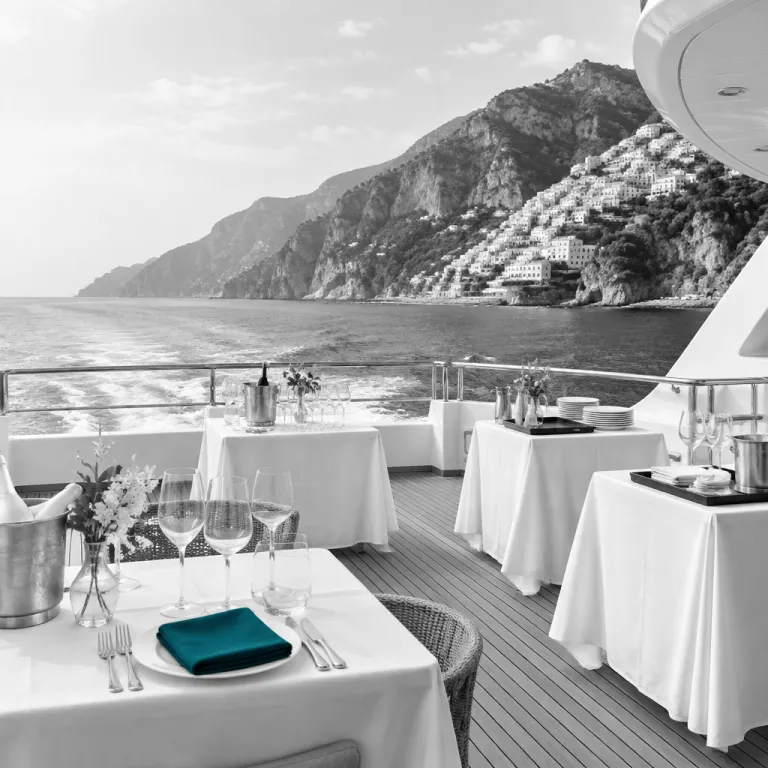
Turning a four day cruise along the Amalfi coast into a strategic talent mirror
When a cruise operator designs a four day cruise along the Amalfi coast, every touchpoint becomes a live case study for hospitality HR leaders. During such a compact coastal itinerary, the way crews manage Capri, Amalfi and Sorrento flows reveals how well recruitment, training and talent strategy are aligned. For HR directors and recruitment leaders, this short-format voyage offers a concentrated lens on service behaviours, learning agility and leadership under pressure.
The typical four day cruise Amalfi itinerary runs for 3 nights and 4 days, with departures from Amalfi or Sorrento harbours and navigation along the coast towards Positano and Ravello. Guests board a private boat or join a shared mini cruise, then set sail towards Capri, Ischia and Procida, often extending to the islands Ponza and Ventotene when the weather and sea conditions allow. This short but intense day cruise rhythm forces crews to orchestrate check in, safety briefings, luxury service and shore excursions with almost airline like precision.
For HR directors in hotel groups, the way a luxury cruise team handles a Capri–Amalfi segment or a Capri–Positano transfer is a live demonstration of operational excellence. Each day, the crew must adapt the itinerary to sea conditions, guest expectations and port constraints, which makes the experience fully customizable in real time. Observing how supervisors allocate tasks, coach juniors and maintain guest satisfaction during a cruise along the Amalfi coast offers more insight than many classroom simulations.
Because the Amalfi coast is a UNESCO World Heritage landscape, the pressure on service standards and sustainability practices is higher than on many urban properties. A four day cruise along this coast obliges teams to balance guest wishes for exclusive and private moments with strict environmental and safety rules. For hotel schools and professional training providers, this is an ideal laboratory to teach how luxury, compliance and guest centricity can coexist in a single, coherent experience.
From capri to positano: what a compressed itinerary reveals about talent gaps
On a typical first day, the four day cruise Amalfi programme starts with embarkation in Sorrento or Amalfi, followed by a gentle navigation along the coast. The crew must welcome up to 8 or 10 guests, manage luggage, explain safety rules and present the itinerary while maintaining a relaxed luxury tone. For HR leaders, this first day is where gaps in onboarding skills, language abilities and emotional intelligence become immediately visible.
The second day often focuses on Capri, with a boat approach to the iconic Faraglioni and, when conditions allow, a visit to the Blue Grotto. Managing tender operations, timing and guest flows around Capri–Amalfi and Capri–Ischia crossings requires precise coordination between deck, hospitality and excursion teams. Any delay or miscommunication during this day cruise segment exposes weaknesses in cross functional collaboration and real time decision making.
On the third day, the cruise usually heads towards Positano and Amalfi, sometimes extending to Ravello via land transfers from the coast. This Positano–Amalfi sequence is where picturesque villages, steep cliffs and narrow ports test both navigation skills and guest handling finesse. HR leaders analysing this day can quickly read whether supervisors know how to rotate shifts, manage fatigue and keep service quality stable during peak activity.
The final day may include a loop towards Ischia and Procida or a slower return along the Amalfi coast with time for swimming in crystal clear coves. When the four day cruise Amalfi product integrates Ischia–Procida or even a Capri–Positano extension, the complexity of logistics multiplies. For a department by department hiring playbook, such as the one described in this resource on hard to fill hotel roles, these itineraries provide concrete scenarios to map which competencies are missing in front office, F&B, technical and guest relations teams.
Using mini cruises as high impact training grounds for hospitality schools
Hotel schools increasingly seek real world environments where students can practise under authentic pressure without compromising guest satisfaction. A four day cruise Amalfi programme, especially in mini cruise format, offers an ideal micro campus where learners rotate between reception, housekeeping, F&B and excursion coordination. Because the boat is small and the itinerary dense, every day becomes a sequence of learning sprints rather than a slow internship.
On a Capri–Amalfi leg, students can observe how senior crew manage the approach to the iconic Faraglioni while maintaining a calm, luxury atmosphere on deck. During a Capri–Ischia or Ischia–Procida crossing, they can practise multilingual announcements, safety demonstrations and personalised service for guests who expect an exclusive yet relaxed experience. When the boat anchors near the Blue Grotto or along the Amalfi coast, trainees can test their ability to explain UNESCO heritage rules and environmental guidelines in clear, guest friendly language.
For training organisations, the four day cruise Amalfi format also supports modular certification. One cohort might focus on guest communication during a Positano–Amalfi segment, while another specialises in logistics and provisioning for islands Ponza and Ventotene operations. Because the itinerary is fully customizable, trainers can design specific scenarios, such as a delayed tender in Ponza–Ventotene or a last minute request for a private excursion to Procida, to evaluate problem solving skills.
Retention is another critical angle, especially around the 90 day and 18 month marks that many hotel groups struggle with. The dynamics observed on a four day cruise Amalfi rotation can feed into programmes inspired by this analysis of hospitality’s two attrition spikes. When students experience the intensity of a cruise operation along the Amalfi coast early in their training, they gain a realistic view of the métier, which can reduce early exits and improve long term loyalty.
Designing employer brands as compelling as a luxury cruise along the Amalfi coast
Guests choose a four day cruise Amalfi product because it promises a seamless, emotionally rich journey across Capri, Amalfi, Positano and beyond. Talents choose an employer for similar reasons; they want a clear itinerary, meaningful experiences and a sense that their journey will be both exclusive and supportive. For HR directors and hotel groups, the narrative of a luxury cruise along the Amalfi coast is a powerful metaphor to redesign employer branding.
Imagine presenting a career path as a fully customizable voyage, where early roles resemble a mini cruise between Sorrento, Amalfi and Positano. Mid career stages could mirror more complex routes, such as Capri–Ischia or Ischia–Procida operations, where professionals handle larger teams and more demanding guests. Senior leadership roles might be compared to orchestrating islands Ponza and Ventotene logistics, where strategic choices about ports, fuel, sustainability and guest mix shape the entire experience.
Employer brands that feel as coherent as a well run four day cruise Amalfi product tend to attract more qualified candidates. They articulate how each day of the employee journey will bring new learning, just as each day of a cruise itinerary along the Amalfi coast reveals different picturesque villages, thermal springs or crystal clear bays. A practical example comes from this case study on a living employer brand lab in hospitality, where the hotel becomes a continuous experiment in aligning guest promise and employee promise.
To make this metaphor operational, HR teams can map each role to a specific segment of the Amalfi coast journey. Entry level positions might be framed as the first day cruise from Sorrento to Amalfi, focused on mastering basics and safety. Leadership development programmes could be positioned as the Capri–Positano or Positano–Amalfi legs, where professionals learn to navigate complexity, manage diverse teams and maintain a luxury standard even when the sea and schedule are unpredictable.
Recruitment and assessment inspired by the realities of sea based hospitality
Recruiting for a four day cruise Amalfi operation requires a sharper focus on adaptability, resilience and multi skilling than many land based hotels. Candidates must be ready to live and work on a boat, handle motion, share tight spaces and maintain a luxury demeanour even when the sea is rough. For specialist hospitality recruitment firms, these constraints offer a useful framework to refine assessment tools for broader hospitality roles.
Structured interviews can integrate scenarios based on real cruise operations along the Amalfi coast, such as a delayed approach to Capri due to sea conditions or a last minute change in the itinerary towards Ponza–Ventotene. Behavioural questions might explore how a candidate would manage guest expectations when the Blue Grotto is closed or when thermal springs excursions in Ischia are cancelled. By asking applicants to read and react to these situations, recruiters can evaluate both problem solving and emotional regulation.
Assessment centres can simulate a day cruise along the Amalfi coast, with role plays covering embarkation in Sorrento, a Capri–Amalfi crossing and a Positano–Amalfi disembarkation. Participants could rotate between guest relations, operations and F&B, mirroring the multi role reality of a mini cruise. Observers would score how candidates coordinate as a team, communicate under time pressure and maintain an exclusive yet warm tone.
Digital tools also play a role, especially when recruitment spans multiple countries and seasons. Video based situational judgement tests can show short clips of crystal clear bays, picturesque villages or crowded decks, then ask candidates how they will respond to specific guest requests. When these tools are calibrated using real data from four day cruise Amalfi operations, they become far more predictive than generic hospitality assessments.
From four day cruise data to long term talent strategy for hotel groups
A four day cruise Amalfi programme generates a dense volume of operational data in a very short timeframe. Every embarkation, excursion, complaint and compliment across Capri, Amalfi, Positano, Ischia, Procida, Ponza and Ventotene can be logged, analysed and translated into talent insights. For hotel groups, this compressed dataset is a goldmine to refine competency frameworks, training curricula and workforce planning.
When HR teams correlate guest satisfaction scores with specific segments, such as Capri–Positano or Ischia–Procida legs, they can identify which skills drive the best results. High ratings during visits to the iconic Faraglioni or Blue Grotto might be linked to strong storytelling abilities and cultural knowledge. Lower scores during crowded Positano–Amalfi disembarkations could reveal gaps in crowd management, signage or multilingual communication.
Cost per person for a four day cruise Amalfi product often ranges between 400 and 700 EUR, depending on season and level of luxury. Publicly listed operators such as MSC Cruises and local companies like Alicost and Travelmar publish similar price brackets for short coastal itineraries, which confirms this order of magnitude. Because the capacity of each boat is limited, usually around 8 to 10 guests on small yachts and gulets, the ROI of every crew member’s performance is immediately visible.
These insights can then be transferred back to land based operations, from boutique hotels along the Amalfi coast to urban properties in other regions. Training modules built on real four day cruise Amalfi scenarios tend to feel more authentic and engaging for employees. As one internal FAQ for guests on these itineraries states, “Is four days enough? Yes to hit major towns; deeper exploration needs more time.” and “What time is best to go? Late spring or early autumn.” — the same logic applies to talent development, where short, intense learning voyages can be combined with longer, deeper career journeys.
Key figures from four day cruise operations and hospitality talent programmes
- Typical duration for a four day cruise Amalfi product is 3 nights and 4 days, which allows visits to major towns such as Positano, Amalfi, Ravello and Capri without excessive travel fatigue for guests.
- Estimated cost per person for a four day cruise Amalfi itinerary usually falls between 400 and 700 EUR, depending on season, level of luxury and whether the service is private or shared.
- Most mini cruise boats operating along the Amalfi coast carry around 8 to 10 guests, creating an intimate environment where each crew member’s performance has a strong impact on guest satisfaction. Local charter companies such as Blue Star Positano and Amalfi Sails advertise similar capacities for small group coastal cruises.
- The Path of the Gods hiking trail above the Amalfi coast covers approximately 7.8 km between Bomerano and Nocelle, which makes it a popular shore excursion to integrate into fully customizable itineraries.
- Seasonality is critical for both guest experience and staffing; four day cruise Amalfi products tend to operate mainly from April to October, with late spring and early autumn offering the best balance between weather and crowd levels according to regional tourism board guidance.
FAQ about four day cruise itineraries and hospitality talent strategy
Is four days enough to design a meaningful Amalfi coast cruise experience ?
Four days are generally sufficient to cover key highlights such as Capri, Positano, Amalfi and possibly Ischia or Procida. For talent strategy, this duration is also enough to observe how teams handle embarkation, excursions and disembarkation cycles. Deeper cultural immersion or extended coaching would require longer programmes, but a four day cruise Amalfi format already reveals most operational strengths and weaknesses.
What is the best period to operate a four day cruise along the Amalfi coast ?
Late spring and early autumn usually offer the best combination of pleasant temperatures, manageable crowds and stable sea conditions. These windows are ideal for both guest satisfaction and staff wellbeing, as heat and congestion are lower than in peak summer. HR teams can also use these periods to pilot new training formats or employer branding initiatives linked to cruise operations along the Amalfi coast.
How many guests should share a boat for effective service based training ?
Small groups of around 8 to 10 guests per boat tend to work best for both luxury positioning and pedagogical value. This scale allows crew members and trainees to interact closely with each guest, personalise service and still manage safety efficiently. For hotel schools and training providers, such group sizes make it easier to observe behaviours and provide targeted feedback.
Can insights from four day cruise operations be applied to city hotels ?
Yes, many competencies tested during a four day cruise Amalfi itinerary are directly transferable to urban properties. Skills such as crowd management, multilingual communication, upselling, crisis handling and cross functional teamwork are relevant in any hospitality context. The main difference lies in the physical constraints of a boat and the rhythm of sea based operations, which often amplify both strengths and weaknesses.
How should HR measure the impact of cruise inspired training on talent outcomes ?
HR teams can track pre and post training KPIs such as guest satisfaction scores, upselling rates, complaint resolution times and early attrition levels. Comparing crews or hotel teams that have completed a four day cruise Amalfi based programme with control groups can reveal clear performance differentials. Qualitative feedback from participants and guests should complement quantitative data to capture the full impact on culture and engagement.