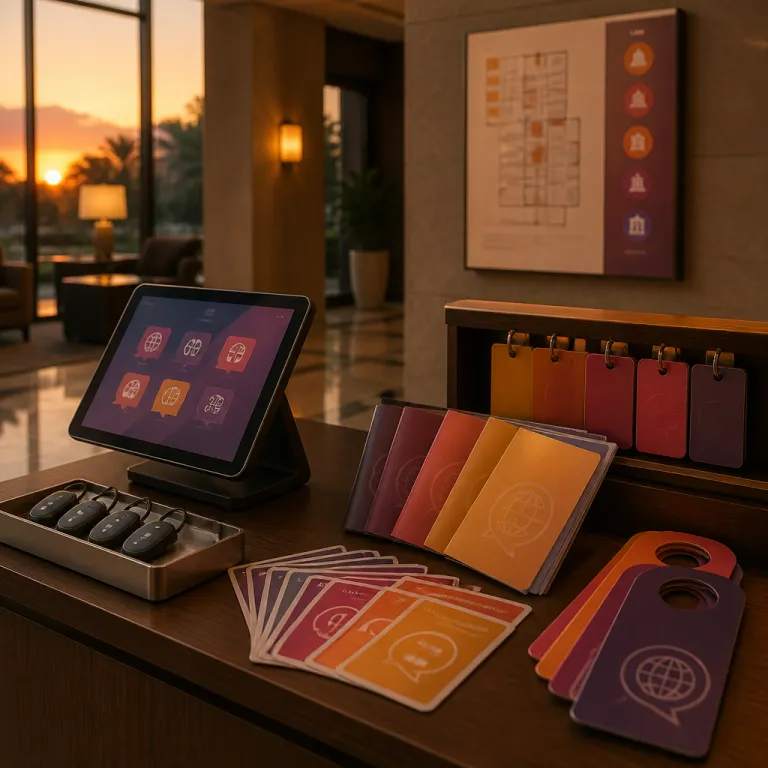
Why multilingual hotel workforce management is now a DEI and P&L issue
US hotels sit at the crossroads of global hospitality and local labor markets. In many properties, more than half of the hospitality workforce on housekeeping, stewarding, and back of house teams speaks a primary language other than English, yet most hospitality management playbooks still assume English only communication. When 55 % of room attendants leave within the first 90 days, multilingual hotel workforce management stops being a soft initiative and becomes a hard operational risk.
Language access in hospitality operations is not just a compliance box to tick. It is a core workforce management strategy that shapes safety, guest experience, and the stability of every hotel équipe, from the kitchen brigade to the night audit desk, because language determines who really understands procedures and who only nods along. When DRH and general managers treat language equity as part of hospitality management rather than a side project, they see measurable gains in retention, productivity, and customer service quality.
Think about where work actually happens in the hospitality industry. Laundry rooms, loading bays, housekeeping pantries, and banqueting prep areas are dense with instructions, hazards, and rapid fire scheduling changes, yet the management systems, signage, and training programs are often English only. In that context, multilingual hotel workforce management is the missing layer that connects property management systems, time tracking tools, and employee service processes to the real people doing the work.
For HR leaders, the question is no longer whether language access belongs in DEI. The real question is how fast you can embed language aware management software, multilingual training programs, and bilingual supervision into your existing hospitality operations without breaking the budget or the schedule. The answer usually starts with a clear map of your hospitality workforce languages, your current working time rules, and the gaps in your time attendance and communication system.
Language barriers, safety incidents, and the hidden cost of monolingual operations
Safety incidents in the hospitality sector rarely show up in glossy dashboards as “language failures”. Yet when you walk a hotel back of house, you see the pattern immediately in chemical handling sheets, lockout procedures, and laundry machine signage that only exist in English while the workforce reads Spanish, Haitian Creole, Portuguese, or Tagalog. In that environment, multilingual hotel workforce management is not a nice to have ; it is the difference between compliant operations and a preventable accident.
Research on high turnover in housekeeping has already linked rushed onboarding and unclear instructions to early exits, and language gaps amplify both problems. When hazard communication, evacuation routes, and equipment instructions are not translated, time attendance records may show people present, but they are not fully safe or productive, which quietly erodes both pay accuracy and morale. This is where workforce management and safety intersect, because a robust management system must treat language as a core variable, not an afterthought.
In practice, the most effective hospitality businesses treat safety briefings as multilingual events. They use visual standard operating procedures, multilingual signage, and short, language specific micro training programs that are reinforced by bilingual supervisors during live hospitality operations, not just in classrooms. That approach turns time tracking and attendance checks into real time safety checkpoints, where supervisors confirm understanding rather than just counting heads.
Housekeeping is the clearest case study. Properties that translate room cleaning sequences, chemical labels, and lost and found procedures into the dominant staff languages report fewer injuries, fewer guest complaints, and lower first 90 day attrition, which directly supports the arguments raised in analyses of the housekeeping labor market and what hotel groups should listen to in their own data. In those hotels, multilingual hotel workforce management is embedded into scheduling, task assignment, and property management workflows, so language access becomes part of daily work rather than a poster on the wall.
Multilingual onboarding, bilingual leaders, and the first 90 days
The first three months decide whether a new hire becomes a long term contributor or another line in the turnover report. For non English dominant employees, those 90 days are often defined by confusion about working time rules, uncertainty about pay and payroll processes, and fear of making mistakes in front of guests or supervisors. Multilingual hotel workforce management tackles that anxiety head on by redesigning onboarding as a language inclusive employee service experience.
High performing hotels now build onboarding journeys that mirror their guest experience design. Contracts, schedules, and time attendance explanations are offered in the employee’s strongest language, while digital management systems allow staff to check their working time, accrued leave, and payroll status in real time through simple, language adapted interfaces. When new hires understand how the system works, they trust the management, stay longer, and engage more actively in training programs that build future supervisors.
Bilingual supervisors are the real force multipliers in this model. A single bilingual housekeeping manager or front office lead can cut the effective supervisor to staff ratio because they close communication gaps, translate complex property management instructions, and coach staff on customer service nuances that no generic video can cover. Their presence turns multilingual hotel workforce management from a software based project into a human centered system where language equity is lived on every shift.
For DRH and talent leaders, this has direct implications for recruitment and internal promotion. Job postings, assessment centers, and leadership training programs should explicitly value bilingual skills as operational assets, not just “nice extras”, especially in markets where the hospitality industry relies heavily on migrant labor. That shift aligns with broader debates on how hospitality careers are losing the long term candidate and what owners can actually do about it, because language inclusive career paths send a clear signal of respect and long term investment.
Technology, real time communication, and measuring language access as an operational KPI
Technology is finally catching up with the linguistic reality of the hospitality industry. Management software vendors now offer multilingual interfaces, mobile apps for time tracking, and integrations with AI translation tools that support real time communication between supervisors and teams, even when they do not share a common first language. In this context, multilingual hotel workforce management becomes a question of smart system design rather than heroic individual effort.
Hotels experimenting with AI based translation devices, multilingual learning platforms, and language aware scheduling tools are reporting faster onboarding, fewer payroll disputes, and smoother shift handovers. When time attendance systems allow staff to clock in, request leave, and view schedules in their preferred language, compliance with working time rules improves, and HR teams spend less time correcting manual errors. The same logic applies to property management and hospitality operations platforms, where multilingual alerts and checklists reduce missed tasks and improve guest experience scores.
To treat language access as a serious KPI, you need clear metrics. Track the percentage of safety and operations documentation available in the top three staff languages, the share of training programs delivered bilingually, and the rate of errors in time attendance or payroll that are linked to misunderstanding rather than intent. Over time, correlate those indicators with retention, incident rates, and customer service scores to build a business case that resonates with owners and asset managers.
Vendors and partners matter here. Language service providers, technology companies, and cultural consultants can help design management systems that embed multilingual workflows into daily work rather than bolting them on later, and they can support staff training on how to use translation devices and language apps responsibly. As one practical guide on language access in hotels puts it, “Ensures effective communication and enhances guest satisfaction.”
Language equity, workplace culture, and the link to guest advocacy
Language access is often framed as a legal or operational issue, but its deepest impact is cultural. When a hotel treats language equity as part of its DEI strategy, non English dominant employees stop feeling invisible and start seeing themselves as full members of the hospitality workforce, with real opportunities for progression and influence. That sense of belonging shows up in lower absenteeism, higher participation in training programs, and more stable teams in critical hospitality operations such as housekeeping and food and beverage.
Culture is built in the micro moments of work. Daily briefings that rotate languages, management meetings that include translated summaries for frontline leaders, and recognition programs that celebrate bilingual contributions all signal that language skills are valued, not tolerated, which reshapes the psychological contract between the hotel and its workforce. Over time, multilingual hotel workforce management becomes synonymous with respect, because it acknowledges the lived reality of the people who carry the service.
The guest side of the equation is just as powerful. Employees who feel linguistically respected are more willing to step forward with ideas, to act as informal interpreters for international guests, and to become authentic brand advocates on social media, which reinforces any structured hotel employee advocacy on social media initiative that aims to turn staff into credible brand ambassadors. That dynamic tightens the link between internal DEI efforts and external reputation, creating a virtuous circle where better employee service leads to better guest experience and stronger online narratives.
For general managers, the strategic takeaway is clear. Multilingual hotel workforce management is not a parallel project to DEI, safety, or service quality ; it is the connective tissue that aligns management software, scheduling, time tracking, and property management systems with the human reality of a global hospitality workforce. When language access becomes a standard part of hospitality management best practices, the hotel stops firefighting turnover and starts compounding the benefits of a stable, respected, multilingual équipe.
FAQ
Why is language access important in hotels ?
Language access is critical in hotels because it directly affects safety, service quality, and retention for a multilingual hospitality workforce. When staff understand procedures, working time rules, and guest expectations in their strongest language, errors decrease and guest experience improves. As one expert summary states, “Ensures effective communication and enhances guest satisfaction.”
How can hotels implement language access effectively ?
Hotels can implement language access by combining staff training, technology integration, and clear policies that embed multilingual practices into daily hospitality operations. This includes translated safety materials, multilingual onboarding, language aware time attendance and payroll systems, and partnerships with language service providers. Bilingual supervisors and targeted training programs then reinforce these tools on the floor.
What are the benefits of multilingual hotel workforce management for DEI ?
Multilingual hotel workforce management supports DEI by signaling respect for non English dominant employees and giving them equal access to information, safety, and career development. This reduces early attrition, especially in roles like housekeeping where language barriers during onboarding are a known turnover driver. It also broadens the pipeline for internal promotion by recognizing bilingual skills as leadership assets.
Which technologies support language access in hotel operations ?
Key technologies include multilingual learning platforms, AI translation tools, mobile time tracking applications with language options, and management software that supports multilingual interfaces for scheduling and property management tasks. Hotels also use translation devices, language apps, and multilingual signage to support real time communication in back of house areas. The most effective systems integrate these tools into existing management systems rather than treating them as standalone gadgets.
How should hotels measure the impact of language access initiatives ?
Hotels should track metrics such as first 90 day turnover for non English dominant hires, incident rates in areas with translated versus non translated procedures, and error rates in time attendance or payroll linked to misunderstanding. They can also monitor participation in training programs delivered in multiple languages and compare guest satisfaction scores on stays involving multilingual service interactions. Over time, these data points show how language access influences both DEI outcomes and core operational KPIs.