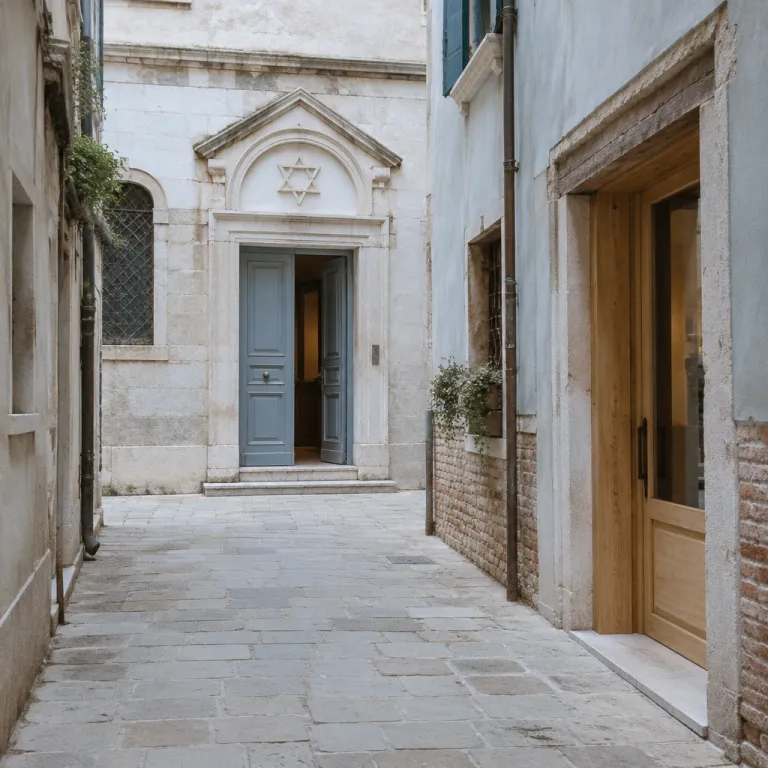
Turning a jewish heritage tour in Italy into a strategic talent lab
For HR leaders, a carefully curated Jewish heritage tour in Italy can become far more than a themed itinerary. When structured as an applied learning journey, this type of programme transforms into a powerful laboratory for observing service behaviours, intercultural sensitivity, and leadership potential in real time. A Jewish heritage itinerary in Italy also offers a rare opportunity to align employer brand, learning design, and recruitment marketing around a single, meaningful narrative.
In practice, HR teams can embed assessment moments into each guided visit, from the first breakfast in a Rome city hotel to the last afternoon in Florence. During a visit to a synagogue or a Jewish museum, participants can be observed on how they handle complex questions about Jewish history, trauma, and resilience, which mirrors how they might support emotionally charged guest interactions. A Jewish heritage tour in Italy, when co-designed with specialised Jewish tour operators and the Union of Italian Jewish Communities (UCEI – Unione delle Comunità Ebraiche Italiane), allows HR directors to benchmark how candidates and managers behave in multicultural, multi-faith contexts that are increasingly common in urban hotels.
These itineraries also create a live testing ground for service standards in kosher restaurants, boutique hotel properties, and heritage venues across Italy. HR directors will find that each day’s private activity, from a guided walk through the Jewish Ghetto in Venice to a wine tasting near San Gimignano, can be mapped to specific competencies: empathy, narrative skills, and attention to ritual detail. By the end of several Italy days on the road, you will have a rich set of qualitative data on how future leaders manage logistics, guest expectations, and cultural nuance under real travel constraints.
Case study : rome, venice, florence as a tri city hospitality classroom
Designing a case study that links Rome, Venice, and Florence turns a Jewish heritage tour in Italy into a structured learning pathway. In Rome–Florence combinations, HR leaders can compare how teams adapt to very different urban rhythms, guest profiles, and heritage narratives within the same country. The route Rome – Venice – Florence also mirrors classic leisure and pilgrimage tours, which helps HR leaders simulate realistic guest journeys.
In Rome, the Great Synagogue and its adjacent Jewish museum offer a first immersion into Italian Jewish history, from the Roman Empire to the twentieth century. Here, a guided tour led by scholars or historians allows participants to observe how expert guides translate complex Jewish history into accessible storytelling for international travel guests. As one reference on Jewish heritage travel in Italy explains without ambiguity, questions such as “What are top Jewish heritage sites in Italy?” and “When is best time to do such tours?” are typically answered by pointing to Rome’s Great Synagogue, the Venice Ghetto, the Florence Synagogue, and the MEIS – Museo Nazionale dell’Ebraismo Italiano e della Shoah – in Ferrara, with spring and autumn recommended for milder weather and fewer tourists (MEIS institutional visitor guidance, 2023).
Moving on to Venice–Florence segments, HR managers can evaluate how teams handle fragile environments such as the historic Jewish Ghetto area in Venice or the synagogue in Florence, where visitor flows must be carefully managed. In Venice, the Jewish Ghetto and its surrounding area require strict respect for local Jewish community rules, which is an ideal context to assess compliance culture and ethical reflexes. In Florence, a one-day workshop on guest communication can be hosted in a hotel meeting room, then tested immediately during an afternoon visit to the synagogue, with feedback loops inspired by venue partnership models such as those analysed in hospitality talent training through venue partnerships. As a Venice community coordinator interviewed for a hospitality training project noted, “We welcome partnerships when hotels treat the Ghetto as a living neighbourhood, not a backdrop, and when learning outcomes include respect for our daily life.”
Embedding jewish heritage content into hospitality school curricula
Écoles hôtelières and organismes de formation can integrate a Jewish heritage tour in Italy as a capstone module that blends cultural studies, operations, and HR. Students prepare in class by studying Jewish heritage in Italy, including the role of ghettos, synagogues, and kosher food regulations in shaping guest expectations. This preparation phase already helps future recruiters and HR managers understand how cultural literacy becomes a core competence for front office and guest relations roles.
During the on-site tours, each day is structured around a different learning theme, such as breakfast service, guided interpretation, or ethical sales. A morning breakfast in a Venice hotel, followed by a guided tour of the Jewish Ghetto and a visit to the synagogue, can be used to analyse how staff communicate about kosher options and religious constraints. In the afternoon, a workshop on narrative hospitality can be held in the city hotel, where students role-play how to present Jewish history respectfully to guests with varied backgrounds.
Partnerships with the Union of Italian Jewish Communities (UCEI) and local Jewish community organisations ensure that content remains accurate and respectful. These partners can co-design virtual 360-degree tours for schools that cannot travel, which still expose learners to the Great Synagogue in Rome, the Jewish Ghetto in Venice, and the synagogue in Florence. For groups of hotels associated with live conferences, these itineraries can be linked to talent ecosystems as shown in analyses of conference-driven hospitality talent ecosystems, turning every study tour into a feeder for internships and graduate programmes.
Designing assessment rich itineraries : from breakfast to leisure overnight
To serve recruitment and talent development goals, a Jewish heritage tour in Italy must be designed with explicit assessment touchpoints. HR leaders can map each day to a specific competency cluster, from intercultural communication to crisis management, and brief assessors accordingly. The aim is to transform ordinary travel logistics into structured observation moments without disrupting the guest-like experience.
A typical Italy days sequence might start with breakfast in a Rome hotel, where participants are evaluated on how they interact with staff about kosher or vegetarian options. Later in the morning, a guided tour of the Jewish Ghetto and a visit to the Great Synagogue allow observers to note how candidates handle sensitive questions about Jewish history and the Holocaust. After a kosher lunch in one of the kosher restaurants in the Ghetto area, a debrief session can focus on how well participants balanced curiosity, respect, and time management.
The afternoon may include a private transfer to another city, such as a one-day move from Rome to Florence with a stop in San Gimignano for wine tasting adapted to kosher standards. During this transfer, participants can be tasked with managing check-in details with the next hotel, coordinating leisure overnight activities, and communicating schedule changes to the group. Each of these micro situations mirrors real hotel operations, giving HR leaders and specialised HR consulting firms a precise view of how future managers will perform under pressure while still delivering a refined guest experience.
From guided tour to employer brand : positioning your group on jewish heritage travel
For groupes hôteliers, aligning employer brand with a Jewish heritage tour in Italy can attract candidates who value meaning and cultural depth. By hosting segments of these tours in their properties, hotels signal a commitment to inclusive narratives and respectful engagement with Jewish heritage. This positioning is particularly attractive to younger talents who seek employers with clear values and authentic community partnerships.
Hotels in Rome, Venice, and Florence can design packages that integrate a guided tour of local Jewish heritage sites, kosher-friendly breakfast options, and flexible day leisure slots. A city hotel near the Venice Ghetto, for example, can offer a bundle that includes a visit to the Jewish museum, a walk through the Ghetto area, and a synagogue tour with a certified guide. HR teams can then invite high-potential candidates or management trainees to join these tours as part of an assessment centre, turning each travel experience into a live demonstration of the brand’s service philosophy.
To support this strategy, HR directors can collaborate with specialised Jewish tour operators and UCEI to ensure that all content respects local Jewish community expectations. Communication teams will find that stories from these tours, such as a day spent between Venice–Florence or Rome–Florence segments, provide rich material for recruitment campaigns and internal engagement. For more advanced HR consulting and education approaches, leaders can draw on frameworks such as those presented in analyses of direct communication strategies in hospitality HR consulting and education, ensuring that every candidate touchpoint around these tours is coherent and measurable. A practical next step for HR leaders is to pilot a small cohort visit in one city, document behavioural observations, and then scale the model across the full Italy circuit.
Building long term partnerships with jewish communities and heritage operators
Sustainable use of a Jewish heritage tour in Italy for talent development requires long-term, trust-based partnerships. HR directors and recruitment managers must engage with local Jewish community leaders, heritage foundations, and Jewish tour operators as strategic allies rather than occasional suppliers. This approach not only secures access to key sites but also reinforces the ethical dimension of using Jewish history as a learning context.
Formal agreements with organisations such as the Union of Italian Jewish Communities (UCEI) can define protocols for group sizes, respectful behaviour in synagogues, and communication about sensitive historical periods. Hotels and schools that host regular tours should co-create codes of conduct that cover photography rules in the Jewish Ghetto, dress expectations in the synagogue, and language guidelines when discussing the Holocaust. These frameworks protect both the dignity of the Jewish community and the reputational risk of the hospitality brands involved.
On the operational side, HR teams can standardise processes for booking private transfers, coordinating kosher lunches, and scheduling day leisure time that respects prayer hours or community events. Over several Italy days of repeated programmes, data on participation, satisfaction, and learning outcomes can be analysed to refine both recruitment criteria and training content. In this way, Jewish heritage tours become an integral part of the talent ecosystem, linking hotels, schools, and HR consulting firms in a shared commitment to culturally intelligent hospitality.
Key figures for jewish heritage tours and hospitality talent
- Italy hosts an estimated 42,000 Jewish residents, which means that Jewish community life remains active and can be engaged respectfully for hospitality learning partnerships (Union of Italian Jewish Communities demographic overview, 2022; U.S.–Italian demographic estimates).
- At least 91 synagogues are listed across Italy, offering a wide range of potential sites for guided tour modules, from major city landmarks to smaller community spaces (Jewish Compass and Italian Jewish heritage mapping data, 2021).
- Jewish heritage tours in Italy typically focus on periods from the Roman Empire through the Renaissance to the twentieth century Holocaust, giving HR teams a multi-era narrative to structure leadership and ethics discussions.
- Spring and autumn are identified as the most suitable seasons for Jewish heritage tours in Italy, due to milder temperatures and lower tourist density, which helps HR departments schedule assessment journeys without peak season operational stress (Italian tourism board seasonal statistics, 2019–2022).
- Growing interest in virtual Jewish heritage tours with 360-degree imagery allows écoles hôtelières and hotel groups to scale access to these learning experiences, even when travel budgets or time constraints limit on-site programmes.
FAQ : jewish heritage tours in Italy as HR and training tools
How can a jewish heritage tour in Italy support recruitment decisions ?
Structured Jewish heritage tours allow HR teams to observe candidates in real service-like situations, from managing cultural sensitivities during a synagogue visit to coordinating logistics during a private transfer. These observations complement traditional interviews and assessment tests, revealing behaviours under pressure and in diverse groups. HR leaders can then make more informed hiring decisions based on demonstrated empathy, adaptability, and communication skills.
What cities in Italy are most relevant for hospitality learning journeys ?
Rome, Venice, and Florence are the primary hubs for Jewish heritage tours in Italy, each offering distinct narratives and operational contexts. Rome features the Great Synagogue and a dense urban environment, Venice centres on the historic Jewish Ghetto, and Florence combines Renaissance art with a significant synagogue. Together, these cities provide a comprehensive laboratory for observing how future managers adapt to varied guest expectations and cultural settings.
How should hotels and schools prepare participants before the tour ?
Preparation should include briefings on Jewish history in Italy, local customs in each Ghetto area, and etiquette for visiting synagogues and Jewish museums. Participants also need clear guidelines on dress codes, photography rules, and respectful language when discussing sensitive topics such as the Holocaust. This groundwork ensures that the learning focus remains on service excellence and intercultural competence rather than on basic behavioural corrections.
Are virtual jewish heritage tours useful for talent development ?
Virtual tours using 360-degree imagery are valuable when travel is not possible, especially for large cohorts in écoles hôtelières or dispersed hotel groups. They allow trainers to introduce key sites such as the Great Synagogue in Rome or the Jewish Ghetto in Venice, then run scenario-based exercises in the classroom. While they cannot fully replace on-site experiences, they significantly broaden access to heritage-based learning.
What ethical considerations should HR leaders keep in mind ?
HR leaders must ensure that Jewish heritage tours are designed in partnership with local Jewish communities and heritage organisations, not used as mere backdrops for corporate activities. Programmes should prioritise education, respect, and support for preservation efforts, including fair compensation for guides and community institutions. Transparent communication with participants about these objectives reinforces both organisational integrity and the educational value of the journey.