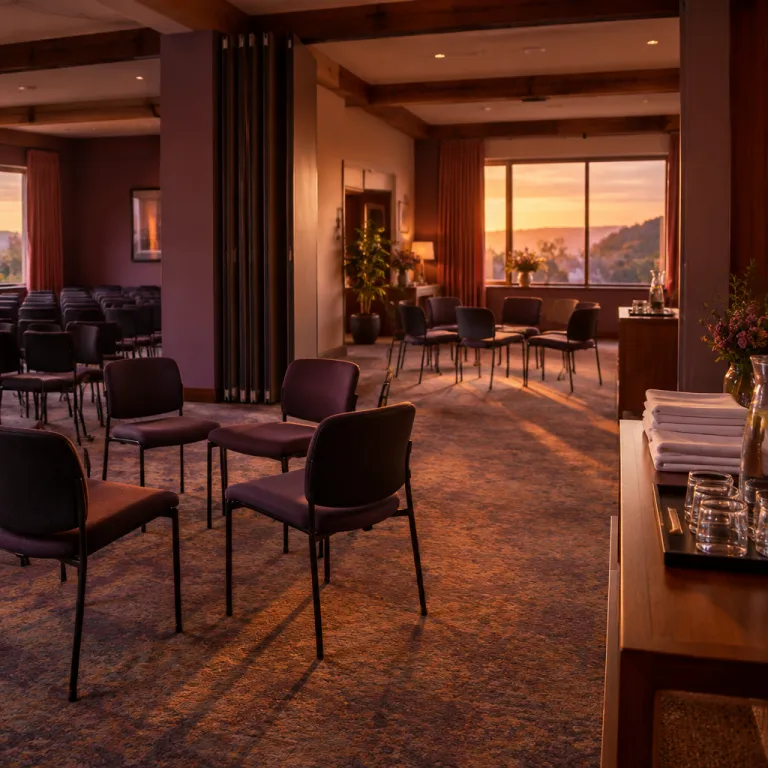
From Broadlands guest house meeting rooms capacity to strategic learning lab
Broadlands Community Center in Virginia functions almost like a compact guest house, and its meeting room capacity offers a useful benchmark for hospitality training design. According to Loudoun County Parks, Recreation and Community Services facility information, the Great Room provides roughly 1,984 square feet of space with a posted maximum occupancy of 108 people. In practice, local trainers report that the room seats about 60 adults comfortably for interactive work, which illustrates how HR leaders should think about the real learning capacity of any training venue rather than relying only on the fire code. For HR directors and recruitment leaders, this gap between theoretical and practical capacity mirrors the difference between a candidate’s CV profile and their true operational readiness on the floor.
When you evaluate Broadlands-style guest house meeting rooms capacity as a training space, the 1,984 square feet available forces you to choose between a single plenary event and several smaller breakout sessions that enable coaching and feedback. This is exactly the type of decision HR directors face when they decide whether to run one large induction session or a series of multi-cohort workshops tailored to different hotel departments. Treating each community venue as a learning asset rather than a neutral box changes how you plan staffing, hired entertainment for team building, and even how you schedule a staff visit from preferred trainers or external vendors.
Hospitality groups that operate a multi-city portfolio can use a Broadlands-style community facility as a template for satellite academies, especially when hotel guest rooms are fully booked and cannot be released for training. In that case, the community center becomes a full-service learning hub, where folding tables, a full kitchen, and audiovisual equipment support realistic simulations of restaurant, banqueting, and church-style ceremony setups. The key is to align the event design, the expected learning outcomes, and the actual meeting room capacity so that every participant has space to practise, not just space to sit.
Designing operational training around real venue constraints
For HR directors and recruitment managers, the Broadlands guest house meeting rooms capacity is a reminder that training logistics are never neutral. A venue that can legally host 108 people but only seat around 60 comfortably for adults forces you to define which staff profiles truly need to attend in person and which can join remotely. This type of decision has a direct impact on payroll cost, service continuity in the hotel, and the quality of the learning experience.
When you plan an operational training event in a community-style venue, you must map every square metre to a specific learning activity, from front desk simulations to multi-outlet restaurant role plays. The Broadlands Community Center’s great room, with its full kitchen and flexible furniture, can be configured as a reception lobby, a breakfast area, or even a church wedding setup to train banqueting teams on guest flow and service choreography. HR leaders should treat each of these events as live assessments of staff visit behaviour, service standards, and the ability of preferred staff to coach peers in real time.
Parking, access, and the surrounding neighbourhood also influence who can attend and when, especially for multi-city teams rotating through a central training venue. A well-planned staff visit schedule ensures that guest rooms and meeting rooms in the operational hotel remain available for revenue-generating events while training takes place off site. For groups that operate near cultural districts such as Broadway-style entertainment zones or historic church venues, integrating local vendors and hired entertainment into role plays can make simulations more realistic and more aligned with actual guest expectations.
From capacity metrics to competency based training pathways
Broadlands guest house meeting rooms capacity is not just a number for the fire marshal; it is a starting point for competency-based training design. When you know that only about 60 adults can be seated comfortably, you are forced to prioritise which roles and which competencies are most critical for a given training cycle. That discipline aligns perfectly with the shift from counting training hours to measuring real operational skills in hospitality.
For HR leaders and hotel groups, this means moving from generic classroom events to targeted sessions where each participant’s profile is matched to a clear skills pathway. A compact rooms venue like Broadlands Community Center is ideal for this approach, because it naturally limits group size and encourages practical exercises in the full kitchen, reception-style zones, and multi-purpose corners. Instead of chasing completion certificates, HR teams can focus on observable behaviours, supported by frameworks such as those discussed in analyses of why hotel training should measure competency, not completion.
Recruitment specialists and hospitality schools can also use the constraints of Broadlands-style guest house meeting rooms capacity to simulate real-world staffing challenges. For example, they can run a single high-pressure service with limited preferred staff and then rotate candidates through roles to see how they respond to questions relating to guest complaints, last-minute event changes, or vendors arriving late. These scenarios generate rich data for visit profile assessments, enabling HR to refine selection criteria and to identify which candidates are ready to be hired for full-service roles in guest rooms operations, events management, or multi-property task force teams.
Embedding sustainability and responsible practices into training venues
Any serious discussion of Broadlands guest house meeting rooms capacity must now include sustainability, because venue operations are part of a hotel group’s ESG narrative. When you use a community center-style rooms venue for training, you have an opportunity to model best practices on renewable energy, waste reduction, and responsible sourcing for vendors. HR leaders can turn every training event into a live case study on how to reduce single-use plastics and to implement steps that reduce energy consumption without compromising guest comfort.
Operational training sessions can, for example, include exercises where teams redesign a coffee break service to reduce single-use items while maintaining a premium experience for participants. In a Broadlands-type venue with a full kitchen, staff can test alternative service flows, reusable containers, and multi-purpose equipment that cut waste and simplify back-of-house operations. These activities help participants understand which sustainability measures are applicable in their own hotel context, from guest rooms to meeting rooms and from single-property operations to multi-city portfolios.
Recruitment and training partners should also integrate sustainability questions into assessment centres held in such venues, asking candidates to propose concrete steps that reduce environmental impact during events. Their response reveals not only technical knowledge but also values alignment, which is increasingly a preferred criterion for hotel groups and church-affiliated venues alike. Over time, this approach builds a pipeline of preferred staff who can champion sustainable practices in every event, whether it is a corporate meeting, a community entertainment night, or a hybrid training session that blends in-person and digital formats.
Orchestrating communication, feedback, and follow up around training events
Managing Broadlands guest house meeting rooms capacity effectively also depends on how you orchestrate communication before, during, and after each training event. HR teams need clear processes for every staff visit, from the initial send inquiry to the final feedback survey, so that no detail is lost between recruitment, training, and operations. A structured communication flow ensures that each participant knows where to park, how to access the venue, and what service scenarios will be practised.
In many hotel groups, the training coordinator acts as a single point of contact address for all questions relating to logistics, content, and assessment. They must be ready to send timely updates, address follow-up issues, and route any complex follow-up questions to subject matter experts in revenue management, guest rooms operations, or entertainment programming. Using microlearning formats that fit between check-ins and short staff breaks can reinforce what was learned in the Broadlands-style venue and keep skills fresh once employees return to their home properties.
Digital tools also help maintain a clear visit profile for each participant, capturing attendance, competencies demonstrated, and any special contributions such as leading a role play or coaching peers. This data supports more accurate performance reviews and succession planning, especially in multi-city hotel portfolios where preferred staff may be deployed across several venues. When communication is handled with the same care as guest messaging, the training experience feels coherent, and the physical constraints of meeting room capacity become a catalyst for more focused, higher-quality learning.
Aligning external partners, entertainment, and community context with training goals
The neighbourhood around Broadlands Community Center shows how the local context of a venue can enrich operational training for hospitality teams. Proximity to residential areas, churches, and entertainment districts similar to Broadway-style zones creates opportunities to simulate real guest flows, from wedding parties to conference delegates. HR leaders can design events that mirror these patterns, using the available capacity to stage realistic check-in surges, banquet turnarounds, and late-night entertainment transitions.
Working with external vendors, such as catering partners or hired entertainment providers, also teaches staff how to coordinate multi-stakeholder events under time pressure. In a compact rooms venue, every delay or miscommunication is visible, which makes it an excellent laboratory for testing response protocols, service recovery scripts, and the division of roles between hotel staff and external teams. These simulations help identify which employees should be considered preferred staff for complex events and which need further coaching before being assigned to high-profile functions.
Finally, community-based venues like Broadlands encourage hotel groups to think beyond their own walls and to build partnerships with local churches, associations, and small entertainment venues. Joint training initiatives can share costs, expand access to guest rooms-style accommodation for trainees, and create a broader talent pool for multi-city recruitment campaigns. When HR leaders treat Broadlands guest house meeting rooms capacity as part of a regional learning ecosystem rather than an isolated asset, they unlock new ways to attract, train, and retain hospitality professionals who are deeply connected to their local communities.
Key figures and operational benchmarks for training venues
- The Broadlands Community Center offers approximately 1,984 square feet of usable space in its main room, which is comparable to a medium-sized hotel meeting suite and sufficient for multi-zone training layouts.
- The legal maximum occupancy of 108 persons contrasts with comfortable seating for about 60 adults, highlighting a gap that HR leaders must consider when planning interactive training events.
- Using a capacity of 60 adults for operational exercises typically allows for 6 to 10 breakout groups, which is ideal for competency-based assessments in guest rooms operations, food and beverage, and events management.
- Community venues with integrated full kitchens, such as Broadlands, enable realistic simulations of banqueting and breakfast service without blocking revenue-generating restaurant space in the main hotel.
- Centralised training venues in suburban locations often offer easier parking and lower rental costs than inner-city hotels, which can reduce the overall training budget while maintaining high-quality facilities.
FAQ about using Broadlands style venues for hospitality training
What is the practical training capacity of a Broadlands style venue ?
While the legal limit is 108 people, a Broadlands-style venue is best used for around 60 adults when you plan interactive operational training. This allows enough space for movement, role plays, and equipment setups that mirror real hotel environments. Trying to reach the legal maximum usually reduces the quality of practice and feedback.
How can HR teams use the full kitchen in such a venue for training ?
A full kitchen enables realistic simulations of breakfast service, banqueting, and room service preparation without disrupting live operations in the hotel. Trainers can stage timed service drills, hygiene inspections, and coordination exercises between kitchen and floor staff. These scenarios help assess both technical skills and communication under pressure.
What types of hospitality roles benefit most from training in community venues ?
Front office, food and beverage, events, and housekeeping teams all benefit from training in flexible community venues. The open layout allows for multi-department simulations, from check-in surges to banquet turnovers. Management trainees also gain experience coordinating cross-functional teams in a realistic but low-risk environment.
How should recruitment teams integrate assessments into training events ?
Recruitment teams can embed structured observations and competency checklists into every exercise, from guest interaction role plays to back-of-house coordination tasks. Assessors should capture behavioural evidence for each candidate, focusing on problem solving, communication, and service recovery. These data points then feed into hiring decisions and personalised development plans.
What facilities are typically included in a Broadlands style community center ?
According to the venue’s own guidelines, “Folding tables chairs, full kitchen, restrooms” are included in the rental, which makes the space highly adaptable for hospitality training. These facilities support a wide range of setups, from classroom-style briefings to practical service simulations. HR teams can therefore design end-to-end learning journeys without needing extensive external equipment.
References
- U.S. Occupational Safety and Health Administration (OSHA) – guidelines on workplace training and safety standards.
- American Hotel & Lodging Educational Institute – resources on competency-based hospitality training.
- Cornell University School of Hotel Administration – research on hospitality talent development and learning design.