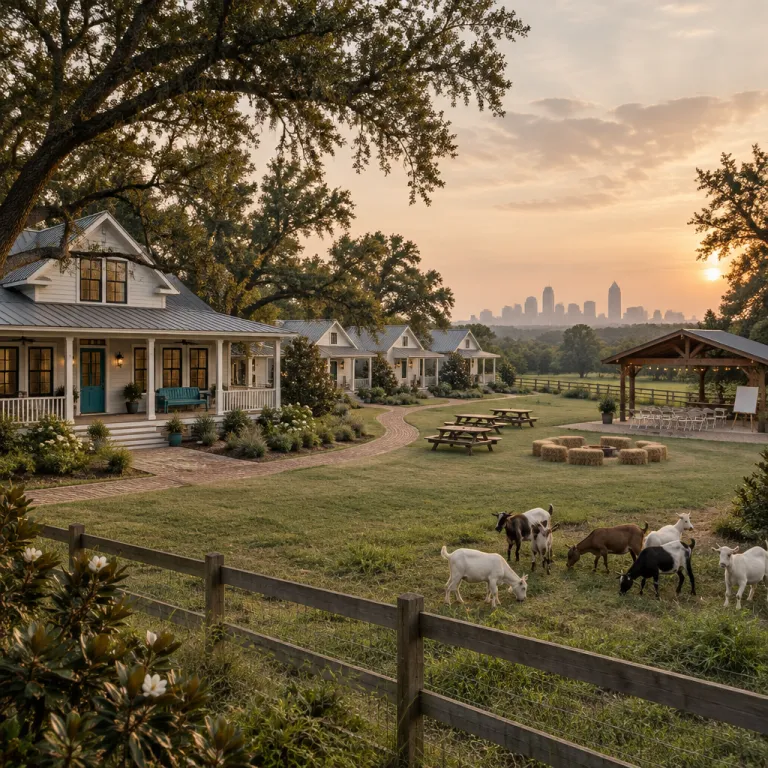
Why a social goat bed and breakfast mindset is reshaping hospitality talent
Imagine a small, animal-friendly bed and breakfast in Atlanta where resident goats are part of the guest experience. The setting may sound quirky, but its talent challenges mirror those of large hotel groups. In such a house, every room, every breakfast service and every guest interaction depends on a tiny team where a single absence can disrupt the entire operation. For HR directors and recruitment leaders, this micro scale reveals in sharp focus what happens across city hotels when talent pipelines fail.
In a concept similar to a social goat bed and breakfast near major Atlanta attractions, employees must master reception, housekeeping, breakfast service and local concierge advice for the surrounding area. They handle check in for guests arriving by car or public transport, guide visitors on how to walk safely from nearby stations to the property, and explain which hotels or boutique properties suit different budgets. This multi skill reality makes traditional, siloed job descriptions obsolete and forces a rethink of training, performance evaluation and career paths.
Such a property often offers a limited number of rooms, perhaps one goat themed room with a king bed and another with twin beds, each with a flat screen television and access to satellite channels. Staff must know how to operate every screen, manage different bathroom layouts, handle bath sheets and hairdryer amenities, and explain all facilities that include free Wi Fi, local parking rules and nearby dining options. This breadth of responsibility is exactly why talent strategies must move from simple headcount planning to capability ecosystems that span the entire hotel portfolio.
From multi role reality to future ready skills: lessons from small scale operations
In a social goat style bed and breakfast, one person may check a guest into their room, prepare breakfast and manage online reviews in the same shift. That multi role pattern is now visible across many Atlanta properties and beyond, where lean teams must still deliver a four or five star experience. For HR leaders, this means that recruitment criteria must prioritise versatility, learning agility and social intelligence over narrow technical expertise.
Consider a breakfast service where the same employee explains allergens, prepares coffee, adjusts the flat screen in the dining area and troubleshoots the satellite connection in guest rooms. That employee also needs to know local transport options, how to guide guests along nearby streets, and where parking is safest close to the house. These concrete tasks illustrate why learning programmes must integrate digital skills, local destination knowledge and guest psychology into one coherent curriculum.
When a boutique property near a major aquarium positions itself as a haven for animal lovers with resident goat mascots, the talent profile changes again. Staff must manage the social media narrative around the goats, ensure animal welfare, and still maintain impeccable bath sheets, hairdryer hygiene and bathroom standards in every room. As one regional HR manager for an independent hotel collection put it, “Our smallest, most characterful properties are where new managers learn to juggle operations, guest relations and storytelling in real time.” For a department by department hiring playbook, HR leaders can draw on specialised analyses of hard to fill hotel roles, then adapt them to the multi role reality of small properties.
Designing formation paths around the guest journey, not the job title
Talent strategies inspired by a social goat bed and breakfast must start from the guest journey, not from legacy organisation charts. From the first online search for accommodation in Atlanta to the moment guests walk into the house, every touchpoint is an opportunity to align skills, tools and behaviours. HR should map these moments in detail, then design training modules that follow the same sequence.
For example, the pre arrival phase may involve responding to questions about parking, proximity to local stations, walking distance to the aquarium and other city attractions. Staff need training on clear written communication, cross selling higher value rooms and explaining why a particular goat themed room or main suite with a flat screen and satellite channels fits the guest’s needs. During the stay, learning must cover how to handle issues with the TV system, manage expectations about bathroom layouts, and maintain impeccable bath sheets and hairdryer equipment.
In a property that markets itself as a retreat or “heaven house”, employees also need emotional intelligence to manage social interactions between guests, animals and the local community. This is where HR can turn operational details, such as the layout of the dining room or the configuration of facilities that include free Wi Fi and shared lounge areas, into training scenarios. Strategic HR assets now extend beyond contracts and payroll; even a simple venue phone number, as explored in case studies on contact channels as HR levers, can become a training tool for service recovery and upselling.
Recruitment branding: from quirky goat stories to serious employer value
A social goat bed and breakfast in Atlanta naturally attracts attention, yet attention alone does not build a sustainable talent pipeline. Employer branding must translate the charm of the goats, the intimacy of the house and the personalised breakfast into clear propositions for candidates. HR and specialist recruitment firms should articulate how these elements create learning opportunities, career acceleration and a strong sense of belonging.
Job descriptions can reference the unique context of a social goat style property near major attractions or in the wider metropolitan area. They should explain that staff will manage a small number of rooms, each with a comfortable bed, a flat screen, satellite channels and carefully curated bath sheets and hairdryer amenities. Candidates must understand that they will handle everything from breakfast service in the dining room to late night troubleshooting of TV issues, all while maintaining a warm social atmosphere.
Recruitment campaigns can also highlight practical advantages such as manageable walking commutes from nearby stations, clear policies on parking and access to local training partners in the Atlanta area. When the property positions itself as a haven for both guests and staff, it signals a commitment to well being, ethical treatment of animals and respectful scheduling practices. This narrative, when aligned with group wide values, helps hotel groups attract talent that thrives in both boutique bed and breakfast settings and larger city hotels.
From pipeline in progress to future ready: rethinking capability architecture
The talent architecture behind a social goat bed and breakfast can inspire broader transformation across hotel portfolios. Instead of treating each hotel, guesthouse or retreat concept as a separate entity, HR can design transversal competencies that travel with employees from one property to another. This approach turns every room, every dining area and every guest interaction into a learning lab.
For instance, an employee who masters breakfast operations in a small house on a quiet street can later transfer those skills to a larger hotel with multiple dining rooms and more complex facilities that include free meeting spaces. The same person who once handled flat screen and satellite troubleshooting in three rooms can scale that expertise to dozens of rooms across several properties in the same city. By structuring training around such transferable skills, HR leaders reduce the duration and cost of onboarding while improving retention and loyalty.
Strategic frameworks on future ready hospitality talent strategies show how to move from reactive hiring to proactive capability building. Applied to a social goat style property, this means planning for roles that do not yet exist, such as guest experience data analyst or animal assisted hospitality coordinator. The goal is to ensure that whether an employee works in a single goat themed room, a full service hotel or a cluster of retreat style houses, they remain employable, engaged and aligned with evolving guest expectations.
Operational detail as a training asset: what HR can learn from room standards
Every operational detail in a social goat bed and breakfast can become a micro module of training. The way bath sheets are folded, the placement of the hairdryer unit, the cleanliness of the separate toilet and the ergonomics of the shower all communicate brand standards to guests. When HR teams codify these details into learning content, they transform routine tasks into measurable KPIs.
In practice, this means creating checklists and short video capsules that show how to present a bed, arrange pillows, position the flat screen and verify that satellite channels and TV systems function correctly. Staff learn to explain facilities that include free Wi Fi, clarify how to walk safely from nearby stations, and advise on parking close to the house. These micro learnings can be shared across hotels in Atlanta and even internationally, creating a common language of excellence from a single boutique property.
Such an approach also supports cross functional mobility. A team member trained in the intimate context of a retreat style house or social goat bed and breakfast can move into a larger hotel and still apply the same attention to detail in rooms, suites and public dining spaces. By elevating the standards of a single goat themed room or breakfast area into group wide benchmarks, HR leaders turn local best practices into a scalable competitive advantage.
Key statistics shaping hospitality talent, formation and recruitment
- According to the American Hotel & Lodging Association’s 2023 State of the Hotel Industry report, U.S. hotels were still operating with staffing levels below pre pandemic employment, highlighting persistent recruitment gaps that directly affect boutique bed and breakfast operations and large hotels alike.
- Data from STR and Tourism Economics in their 2023 U.S. Hotel Forecast show that average daily rates in many urban markets, including Atlanta, have surpassed 2019 levels, which increases pressure on HR leaders to align talent quality with higher guest expectations and price points.
- Research by Deloitte in its 2022 hospitality and leisure workforce insights indicates that properties with structured learning programmes can improve employee retention by up to 30 %, a critical factor for small houses and retreat style properties where each departure has outsized impact.
- A 2022 survey by McKinsey on frontline service roles found that employees who perceive clear career paths are roughly twice as likely to stay beyond two years, underlining the importance of capability based training from goat themed rooms to full service hotels.
FAQ: hospitality talent strategy inspired by boutique bed and breakfast models
How can a small bed and breakfast compete for talent with large hotel groups ?
Smaller properties can compete by offering broader responsibilities, faster skill acquisition and closer mentoring than many large hotels. A social goat style operation lets employees manage rooms, breakfast service, guest relations and digital tasks in one role. This accelerates learning and can be positioned as a career springboard within wider hotel networks.
Which skills are most critical for staff in boutique properties with themed concepts ?
Key skills include polyvalent operations, emotional intelligence, digital literacy and strong local destination knowledge. In a goat themed retreat near a major aquarium, for example, staff must manage animal interactions, explain facilities that include free Wi Fi and satellite channels, and guide guests around the surrounding neighbourhood. These skills transfer well to larger hotels across the city.
How should formation programmes adapt to multi role frontline positions ?
Training should be modular and journey based, following the guest experience from booking to post stay feedback. Short, scenario driven modules can cover check in, breakfast service, room standards, TV troubleshooting and social media responses. This structure allows HR teams to update content quickly as guest expectations and technologies evolve.
What recruitment messages resonate with candidates for small, characterful properties ?
Candidates respond well to clear promises about learning, autonomy and work environment. Highlighting the chance to manage a variety of tasks, from preparing rooms with high quality bath sheets to hosting in an intimate dining room, can be more attractive than a narrow role in a large hotel. Emphasising ethical practices, such as animal welfare in a social goat context, also strengthens employer appeal.
How can HR leaders scale best practices from one boutique property across a group ?
HR can document operational excellence in one house, then convert it into standard operating procedures, micro learning content and coaching guides. These materials can be shared across hotels in Atlanta and other regions, with local adaptations for culture and regulations. Over time, this creates a consistent talent culture anchored in real world success rather than abstract competency models.