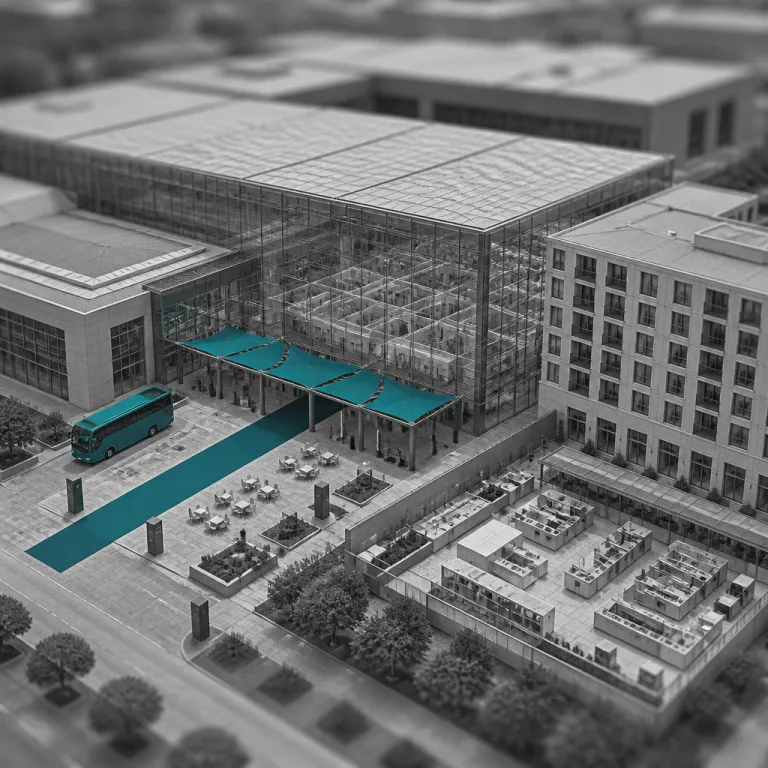
MICE industry news as a strategic radar for hospitality HR leaders
Human resources leaders who follow MICE industry news regularly gain a decisive edge. When a new meetings or incentive travel format appears in Asia or Europe, it immediately changes the skills profile required in hotels, convention centre teams, and destination management units. Every HR director (DRH) who tracks this flow of business events intelligence can translate it into concrete recruitment and training priorities for their team.
The global meetings and incentives ecosystem has become a primary driver of high value tourism and corporate travel, and this shift is transforming how hospitality companies structure their talent pipelines. A single large scale MICE events series in North America or a flagship trade convention in Sydney can generate months of event tourism, business travel, and incentive travel demand, which in turn requires agile management of front office, revenue, and event spaces staffing. For HR directors, each piece of MICE news is no longer just an industry headline; it is an early signal about future workforce volumes, new roles, and emerging competences.
Recent MICE industry developments show that virtual and hybrid events are now embedded in the sector, not a temporary trend. According to Statista’s “Size of the global meetings, incentives, conferences and exhibitions (MICE) market from 2020 to 2030” (accessed March 2024), the global MICE market is projected to reach around 1.6 trillion USD by 2030, while Grand View Research’s report “Virtual Events Market Size, Share & Trends, 2023–2030” (accessed March 2024) notes double digit annual growth for virtual formats. These dynamics force hotels and convention centre operators to rethink their recruitment strategies. When HR leaders read events news about AI assisted event management or VR enhanced meetings and incentives, they must immediately ask which roles, from event management company coordinators to MICE tourism sales managers, will need upskilling or entirely new job descriptions.
From event spaces to learning spaces: new competency maps for MICE hospitality
Hospitality schools and training organisations (organismes de formation) that align their curricula with current MICE industry news create graduates who are operational from day one. The classic focus on rooms division and F&B is no longer sufficient when hotels operate as full service business events hubs, with complex event tourism flows and demanding corporate travel clients. Training programmes now need to integrate modules on MICE tourism dynamics, destination management practices, and the specificities of MICE events logistics.
In practice, this means teaching students how to manage hybrid events operations, coordinate with a destination management company, and interpret data from event management software to optimise both guest experience and profitability. Case studies should cover concrete situations such as hosting a regional trade convention in a city centre hotel, supporting a global management company during an incentive travel programme, or coordinating with a tourism board on MICE travel campaigns. When learners read events case material based on real MICE news, they understand how international travel patterns, business events calendars, and tourism board strategies shape day to day operations.
For HR directors designing internal academies, the same logic applies to continuous learning for existing teams. A revenue manager who once focused only on transient tourism must now master pricing for event spaces, meetings and incentives packages, and long stay MICE travel blocks. HR leaders who want to build high calibre event planners can rely on specialised guidance such as structured pathways to enter and elevate the event planning industry, then adapt these frameworks to their own company culture. The objective is clear: transform every property that hosts MICE events into a learning laboratory where operational teams continuously refine their skills in line with the latest industry developments.
Global MICE hubs as living classrooms for hospitality talent
Major MICE destinations such as Sydney, Kuala Lumpur, and key capitals in Europe and the Americas have become living classrooms for hospitality talent development. A convention centre in Sydney that hosts a series of international business events offers an ideal environment for apprenticeships, job shadowing, and rotational programmes in event management, destination management, and MICE tourism sales. When HR leaders structure partnerships with these venues, they turn every large scale event into a practical training ground.
For example, the International Convention Centre Sydney (ICC Sydney) hosted the Sibos 2018 financial services conference, welcoming more than 7,000 delegates and over 180 exhibitors. Local hotels, airlines, and destination management partners coordinated closely with the venue and the tourism board to deliver seamless event experiences. HR leaders who embed trainees within such multi stakeholder projects expose them to the full MICE sector value chain, from corporate travel negotiations to on site event spaces operations. This type of immersion helps young professionals read complex business events dynamics, understand how MICE tourism differs from leisure tourism, and appreciate the strategic role of international travel corridors.
Collaboration with convention and visitors bureaux is particularly powerful for aligning education with real MICE industry news. Resources such as this analysis of how convention and visitors bureau jobs reshape hospitality talent and training show how public private partnerships can structure new career paths. When a city invests in a new convention centre or upgrades its event spaces, HR directors, schools, and specialised HR consultancies (cabinets RH spécialisés) should be at the table to co design apprenticeship schemes, dual education tracks, and management company secondments that reflect the latest MICE news and trade forecasts.
Reinventing recruitment for a data driven MICE hospitality workforce
Recruitment practices in hospitality must now reflect the data driven reality highlighted in current MICE industry news. A property that targets high yield business events and MICE tourism can no longer rely solely on traditional interviews and generic job descriptions. Instead, HR leaders need competency frameworks that integrate digital literacy, sustainability awareness, and cross cultural communication tailored to MICE operations.
When HR teams read events analyses about AI and VR integration in the MICE industry, they should translate these trends into specific hiring criteria. Event coordinators must be comfortable with virtual platforms, hybrid event workflows, and collaboration with technology providers, while sales managers must understand how to position event spaces for both physical and digital formats. The shift towards greener event tourism also requires candidates who can work with sustainability consultants, track environmental KPIs, and communicate credibly with clients who prioritise responsible MICE travel.
Selection processes should therefore include scenario based assessments grounded in real MICE news cases, such as managing a last minute change from a physical convention to a hybrid format in July due to international travel disruptions. Candidates can be asked to design a response plan that protects business continuity, maintains service quality, and coordinates with a destination management company and tourism board partners. By embedding such exercises, HR directors ensure that new hires are not only technically qualified but also capable of reading the wider sector context and making decisions that support both company performance and guest satisfaction.
Building continuous learning ecosystems around MICE industry developments
For hotel groups (groupes hôteliers) and management company networks, the most resilient strategy is to treat MICE industry news as a permanent curriculum feed. Instead of updating training catalogues every few years, learning leaders can create agile modules that respond quickly to shifts in business events formats, MICE tourism flows, and corporate travel expectations. Each major MICE events announcement becomes an opportunity to refresh content, from sales scripts to operational checklists.
One practical approach is to establish an internal "events read" ritual where cross functional teams analyse recent MICE news together. A revenue manager, an event spaces supervisor, and a destination management liaison can jointly interpret how a new trade convention in Europe or a major incentive travel programme in the Americas will affect staffing, pricing, and service design. These sessions help teams connect abstract industry headlines with concrete operational decisions, such as adjusting shift patterns in July or reconfiguring meeting rooms for hybrid meetings.
Partnerships with professional associations reinforce this learning ecosystem. Organisations such as the International Congress and Convention Association, Meeting Professionals International, and the Society for Incentive Travel Excellence provide structured insights into global MICE sector trends, from meetings and incentives best practices to emerging event tourism markets in Asia. HR leaders can integrate these resources into blended learning journeys, combining external certifications with internal case studies and mentoring, while also leveraging specialised content on elevating talent pipelines through graduate programmes in hospitality management. The result is a culture where every team member continuously upgrades their skills in line with the latest MICE industry developments.
Aligning employer branding with the new MICE talent narrative
Employer branding in hospitality now competes directly with other service industries that also benefit from MICE tourism and business events growth. Young professionals who read MICE industry news see a sector that is innovative, international, and increasingly sustainable, and they expect employers to reflect this narrative. HR directors and specialised HR consultancies must therefore position hotels, convention centre operators, and destination management firms as modern workplaces where careers in MICE events can evolve rapidly.
Concrete storytelling is essential to make this positioning credible. A company that manages event spaces in a major convention centre can highlight how its teams handled a complex series of meetings and incentives for clients from Asia, Europe, and the Americas, coordinating international travel, corporate travel policies, and local tourism experiences. Another management company might showcase how its destination management division partnered with a tourism board in Kuala Lumpur to design inclusive incentive travel programmes that respect local communities and reduce environmental impact.
Transparent communication about learning and mobility opportunities also strengthens employer attractiveness. Candidates want to know whether they can move from front office roles into MICE tourism sales, from event operations into destination management, or from local hotels into regional business events hubs. When HR leaders share real career paths, backed by structured training and exposure to global projects, they turn abstract MICE news into tangible professional opportunities. This alignment between narrative and reality is what ultimately secures long term loyalty and high performance in teams that operate at the heart of the MICE industry.
Key statistics shaping MICE talent, education and recruitment
- Statista’s “Size of the global meetings, incentives, conferences and exhibitions (MICE) market from 2020 to 2030” (accessed March 2024) projects the market to reach approximately 1.6 trillion USD by 2030, placing business events and MICE tourism among the most valuable segments of the wider tourism industry.
- Grand View Research’s “Virtual Events Market Size, Share & Trends, 2023–2030” (accessed March 2024) reports a compound annual growth rate above 20 percent for virtual and hybrid formats, which forces hospitality employers to prioritise digital skills and hybrid event management in all training plans.
- Industry analysts cited in the same Grand View Research study note that hybrid and virtual events can significantly reduce travel related emissions compared with fully physical formats, reinforcing the need for hospitality teams trained in sustainable event tourism practices.
- Professional associations such as ICCA, MPI, and SITE collectively represent thousands of companies active in meetings and incentive travel, offering a rich ecosystem for co developed education and certification pathways.
- Post pandemic recovery scenarios from ICCA and major travel management companies show that business events and corporate travel often rebound faster than pure leisure tourism, which means hotels positioned in the MICE industry must secure qualified talent earlier in the cycle to capture demand.
FAQ about MICE industry news and hospitality talent
What is the MICE industry and why does it matter for hospitality HR ?
What is the MICE industry? It is the Meetings, Incentives, Conferences, and Exhibitions sector. For hospitality HR leaders, this industry represents a high value segment that drives demand for event spaces, specialised services, and international travel, which in turn requires targeted recruitment, advanced training, and close collaboration with destination management and tourism board partners.
How has COVID-19 affected MICE talent needs in hotels and venues ?
How has COVID-19 affected MICE? It accelerated virtual and hybrid event adoption. As a result, hotels, convention centres, and management company operators now need teams who can manage digital platforms, support hybrid meetings and incentives, and coordinate with technology providers, making digital literacy and change management central to all training programmes.
Which current MICE trends should influence hospitality education curricula ?
What are current MICE trends? They include virtual events, sustainability, and AI integration. Hospitality schools and training organisations should therefore integrate modules on hybrid event operations, sustainable event tourism, data driven revenue management for business events, and collaboration with AI powered tools used by event planners and destination management companies.
How can HR leaders use MICE industry news to improve recruitment quality ?
HR leaders can track MICE news about new convention centre projects, major trade events, and emerging business events destinations to anticipate future staffing needs. By aligning job profiles, assessment exercises, and employer branding with these developments, they attract candidates who are already motivated by business events careers and prepared to operate in a fast evolving sector.
What partnerships are most effective for building MICE ready hospitality talent ?
The most effective partnerships combine hotels, convention centres, tourism boards, destination management companies, and professional associations such as ICCA, MPI, and SITE. Together they can co design apprenticeships, dual education tracks, and continuous learning programmes that reflect real MICE events operations, ensuring that graduates and employees are immediately productive in the business events environment.
References
- Statista – “Size of the global meetings, incentives, conferences and exhibitions (MICE) market from 2020 to 2030” (accessed March 2024).
- Grand View Research – “Virtual Events Market Size, Share & Trends, 2023–2030” (accessed March 2024).
- International Congress and Convention Association (ICCA) – Global meetings industry insights (accessed March 2024).